
United States v Talbot: A Veteran of Creative Suffering
Insights from White Collar Criminal Defense Attorneys Trusted Nationwide
Achieving Justice in America isn’t easy—often, it’s an arduous, winding road fraught with dead ends and false paths. Some may never find it, and some may endure unbearable suffering to see a ray of hope. Some may harness their unearned suffering and find redemption.
But even the dark chapters of Adrian Talbot’s story are the epitome of the American spirit, a source of strength, and a testament to his endurance and character.
As his wife, says in her subtle New Orleans drawl, “Adrian was born in a shack with dirt floors.” My eyes widened as I typed to capture every detail for my opening statement. “His grandmother took care of him”, she tells me as she struggles to do justice to his heroic story, wishing Adrian could tell it himself.
Adrian was born in Guyana, a small equatorial Caribbean country and previously only famed for its poverty. No plumbing, dirt shack, but ample doses of happiness untainted by the modern Western society. Eventually, Adrian made his way to the United States after his father, an accountant, established a homestead and an income. The growing family settled in Mt. Vernon a famous settlement for West Africans and Jamaicans. It’s famously the former home of Sean Combs, Heavy D, and DMX, and we can’t forget the New York Times “Greatest Actor of the 21st Century,” Denzel Washington, Adrian’s neighbor.
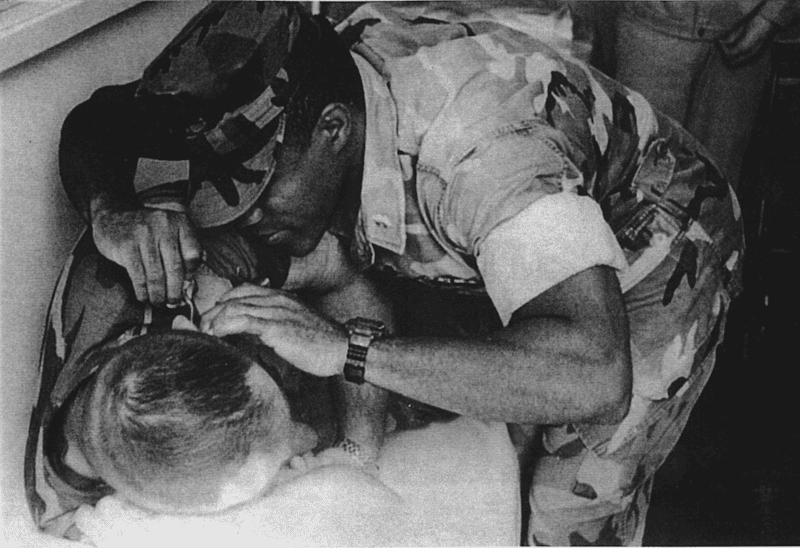
The apple of adventurous spirit didn’t fall far from the tree, and Adrian found himself enlisting in the Navy because “a friend was doing it”. Shipped off to basic training, he found himself joining the ranks of dedicated and passionate hospital corpsmen, eventually serving with a Marine Battalion in Camp Lejeune, North Carolina.
Ironically, my former duty station as a Marine Corps Judge Advocate and the birthplace of my two daughters.
Adrian’s active duty service at Camp Lejeune put him in the epicenter of one of the nation’s biggest public health crises since Agent Orange – the Camp Lejeune water crisis.
Camp Lejeune water was so contaminated that in 2012, President Obama signed into law an act that declared a veteran’s disability “presumptively” connected to Camp Lejeune where the Veteran can show that they lived near Camp Lejeune for 30 days during the toxic period and that they developed a presumptive disease. Like many veterans, Adrian spent several years at Camp Lejeune, guzzling from the metal “water bulls” filled with toxic water as he aided Marines wounded in training.
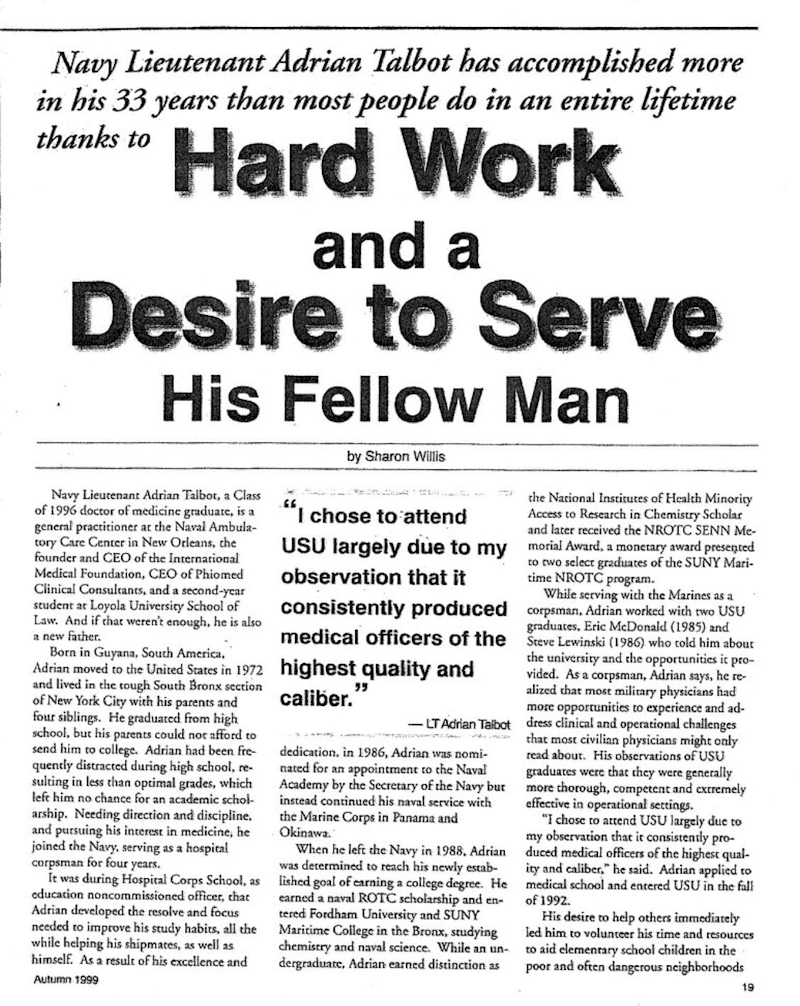
It was during his hospital school that Adrian found his passion for medicine and addressing clinical challenges. He realized that as a military physician, he “had more opportunities to experience and address clinical and operational challenges that most civilian physicians might only read about.”
You won’t find many people who turned down a SECNAV Naval Academy appointment. Adrian elected to do just that: He continued to serve and treat his Marine comrades in Panama and Okinawa.
Unaware of the lottery of hellish disorders he’d been drafted into, Adrian ultimately attended USU and graduated as a Navy Doctor in 1996. His distinguished and unblemished career is a testament to his skill and professionalism. He served as the Battalion Surgeon for the 3rd Marine Division in Okinawa and in the ambulatory care center in New Orleans, Louisiana, where he ultimately settled.
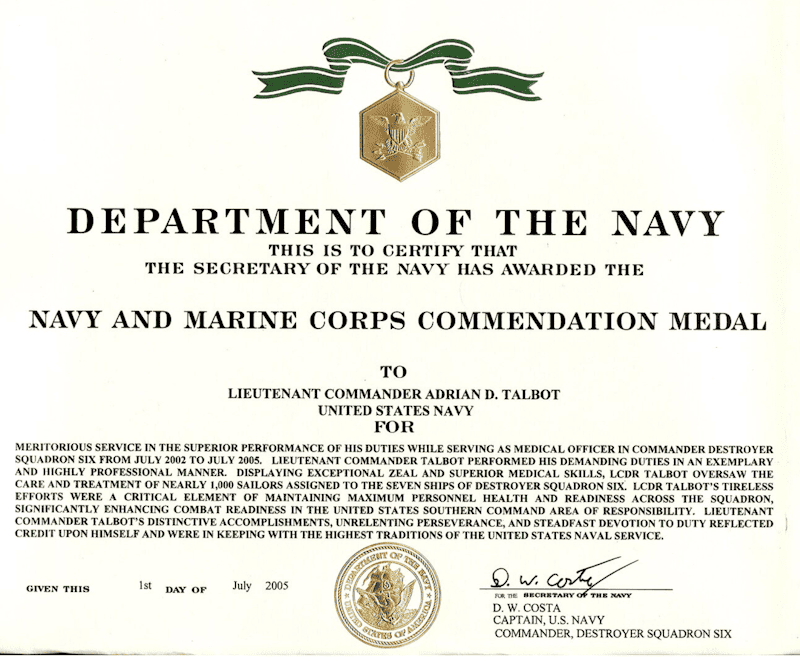
His Navy career culminated in an assignment as the Medical Officer of Commander Destroyer Squadron Six Zero. DESRON 60, as it has been called, earned its stripes on Omaha Beach, Normandy.
During the three-week trial, I wondered if we ever walked the same hallway. Did we ever sit in the same lecture hall or salute the same officer? At times, I wanted to ask, only to be halted by the resounding fact that he could not recall.
He could not share his story. He did not know his own story.
After finishing his Naval Service in 2005, Dr. Talbot settled just north of New Orleans to start his medical practice, but not before earning a law degree from Loyola, which was somewhere in the mix. Always the capstone of a high-achievers resume.
Keenly aware of the addiction and suicide crisis impacting veterans, he quickly gained interest in addiction medicine. Adrian was one of the first physicians in Southern Louisiana who was willing to treat the stigmatized population of patients suffering from addiction to drugs.
Stripping medicine of its humanity entirely, Federal Prosecutors would later attack him relentlessly with every act of non-compliance by the vulnerable population prone to relapse.
Despite the Government’s apparent misgivings with his FDA-approved use of addiction medicine, both the United States Department of Health and Human Services and the DEA approved him to prescribe Suboxone, a controversial but vital FDA-approved drug used to treat patients suffering from addiction.
As fate would have it, his addiction credentials were immediately useful.
Adrian was thrust back into action again as the levy broke and eighty percent of New Orleans flooded. Doctors’ offices, pharmacies, and hospitals were ravaged. Emergency services could not keep up, and help was notoriously late. Healthcare entirely fled the city to the safety of Houston, Baton Rouge, and neighboring unaffected cities. Some would take a “hurrication” (as my Uber driver pointed out) that would never end.
As the system collapsed, even the Feds needed quarter. His former office manager informed me that the FBI sought refuge in Dr. Talbot’s practice when their spaces were decimated.
Dr. Talbot stayed, and he needed to. Not many had previously experienced managing a healthcare crisis in an uncertain and remote environment and Adrian Talbot. His Naval experience qualified him as an expert in establishing field hospitals and providing medical care with limited supplies, staff, and higher-level support.
Dr. Talbot’s practice proceeded from 2005 to 2015 unblemished and unimpeded. The DEA frequently inspected his due to its work plan to inspect addiction treatment facilities at least annually. He treated addiction patients, primary care patients, and pain management patients. He established a Suboxone clinic that would rival any office-based opioid treatment facility of its day.
Patients received an initial referral to a pain psychologist and subsequent counseling classes to educate them. Patients reported that they were a helpful and constant reminder of the horns of their disease.
One patient who received suboxone treatment for 20 years with Dr. Talbot would later testify between sobs— Dr. Talbot “saved my life.” Another credits Dr. Talbot with saving his family and helping him get back on his feet to run a business and help others with addiction. The Government would later argue that a well-intended physician would have more success stories— an impermissible burden shift.
Not to mention ignorance that the disease and not the treatment determines the outcome.
A notable radio DJ in the area was a patient of Dr. Talbot’s for many years and educated the jury on his trips to the methadone clinic before he met Dr. Talbot. Dr. Talbot’s office manager — who testified at trial —recalls seeing Dr. Talbot praying with a walk-in patient who suffered from addiction and came to him for help.
A local dentist brought his son in for care after he was ravaged by addiction, and his dad had no one to turn to.
Unfortunately for Dr. Talbot, his toxic exposure to Camp Lejeune water was silently eating away his brain. He started forgetting the names of his patients, forgetting their ailments.
Previously, he was a personable doctor who remembered his patients, their kids, their conditions, and their stressors. Realizing something was wrong but respecting his lifelong love for servicemembers and clinical challenges, he sought a job with the Veterans Administration in Alexandria, Louisiana. This transition was later villainized as an effort to double his income by abandoning his clinic, the Prosecutors silently aware that he donated his entire VA salary to the practice.
He’d hoped to work in a non-clinical setting overseeing administration, something that required less technical ability. He would be among the safety of familiar colleagues united around veteran care, or so he thought.
Each day, he would drive three hours to oversee 13 clinical departments as the chief of medicine at the VA. He would return each night to check on his patient files and process any needed prescriptions. Louisiana nurse practitioners can see patients independently but cannot prescribe for chronic pain. They can, however, assess patients’ chronic conditions and discuss treatment with a physician who can prescribe. If patients would require a physician visit, they were scheduled to see Dr. Talbot directly. This practice was widely used – even at the Veterans Administration – according to a VA executive who testified at trial as well as a former VA doctor.
Burning the candle at both ends and struggling to keep up with the demands of his VA position, which greatly expanded due to VA vacancies, Dr. Talbot started to suffer a rapid mental health decline.
He contacted a neurologist, Dr. Anil Prasad.
Dr. Prasad, a board-certified neurologist, evaluated Dr. Talbot and determined that he had dementia, so additional testing was ordered. In a lengthy progress note, Dr. Prasad detailed his evaluation and the conditions presented by Dr. Talbot. Realizing that Dr. Talbot could no longer practice, Dr. Prasad offered an opportunity to Dr. Talbot, who was now desperate to protect his patients and ensure his practice would not close. He was, at that time, one of the few pain management and addiction providers practicing in the area.
Dr. Prasad offered to act as medical director for Dr. Talbot’s practice and take over the supervision of nurse practitioners for the sum of $4,000 per month. Dr. Talbot, out of options to protect his patients, and knowing that he must report his condition to the board, agreed and provided a contract to Dr. Prasad placing him solely in charge of all clinical responsibilities at the practice.
What Dr. Talbot didn’t know is that he was previously disciplined by the board for his prescribing practices. Meanwhile, the Veterans Administration was reeling from the implementation of the CDC guidelines and began offering financial incentives for physicians who cut patients off of opioids. Dr. Talbot was asked to run the pain clinic at the VA, and even with his slipping technical skills, he was able to see patients but placed documentation in a separate part of the unfamiliar VA charting system. The VA investigated him and determined that he was merely required to get training.
At that same time, the Chief of Staff position was shared by Dr. Rivera and Dr. Orlando, who were the subject of an EEO complaint and OIG complaint filed by Dr. Talbot alleging that Dr. Orlando discriminated against Dr. Talbot due to his refusal to condone Dr. Orlando’s rampant nepotism. Another physician at the VA filed a complaint against Dr. Orlando for a pay disparity – she was removed and pigeonholed.
Both Dr. Talbot and the other physician were subjected to scrutiny and unsanctioned action by Dr. Orlando. Specifically, Dr. Talbot was subjected to a new and unsanctioned re-investigation of his prior documentation. When Dr. Orlando was told to “stand down,” he sent a report directly to the VA OIG, it landed directly into the lap of an agent polishing his badge for his first case.
This unsanctioned investigation became a mainstay of Dr. Talbot’s trial, and the defense team was prohibited from informing the jury of Dr. Orlando’s nefarious motives, introducing Dr. Talbot’s retaliation complaint, and cross-examining Dr. Orlando – who is now deceased.
Many physicians know that once you are wounded, the vultures circle. Orlando’s report would start a corresponding hunt for culpability.
The VA OIG gobbled up the report, and once it learned that Dr. Talbot owned a private practice – that Dr. Prasad was operating – they began investigating. A search warrant followed in 2018 and the records of 20 patients were seized.
Prasad, frightened by the search warrant, immediately surrendered his registration and, believing he had culpability for his prescribing practices, elected to cooperate against Dr. Talbot. He was charged individually and pleaded guilty before charges were ever filed against Dr. Talbot.
Dr. Talbot’s mental health was in steady decline, and by August of 2021, his condition was so poor that the State of Louisiana formally “interdicted” him, declaring him not competent to handle his own affairs. The Government subsequently raced to the Grand Jury and obtained an indictment just ten days later.
Dr. Talbot promptly filed a motion for a competency hearing, which was granted. At the hearing, two expert neuropsychiatrists testified on behalf of Dr. Talbot that he was not competent to stand trial. Four separate physicians collectively would determine that he was not competent. Their opinion was in good company: The Veterans Administration, the State of Louisiana, and physicians at a VA specialist clinic all confirmed his diagnosis of early onset cognitive decline.
Not a single doctor would credibly find that he was malingering. Indeed, the only entities that found him “competent” were the Federal Court and the paid government experts.
Suspiciously, the Government relied on the testimony of an expert who elected to repeat malingering tests eight times until he could find two that failed. The creator of those tests wrote a letter indicating that the Government’s expert misapplied the test by manipulating the error rate and repeating the test.
She informed the judge that virtually any person who provided the test under those circumstances would have been found to be malingering.
Nonetheless, after over three separate competency hearings, Dr. Talbot was determined to be competent to stand trial.
Incompetent under State law but competent in Federal court. Incompetent in the eyes of the Veterans Administration. Incompetent in the eyes of even the litigious insurance company that held his disability policy.
He would proceed to trial without the ability to meaningfully discuss his case, remember his patients, review records, identify evidence, and provide context to the allegations. His court-appointed guardian and attorney was prohibited from sitting at the counsel table.
Each day, he would sit in his chair staring blankly forward as this strange and foreign proceeding played out. When asked by the Judge, to test what she believed was an act of malingering, who his counsel is he responded,
“Geri is my attorney.”
Geri is his wife.
When asked why he was there, he could not formulate an answer. It was lost in a sea of studders and confusion. It was enough to swell up the eyes of the former Marine Officer, Global War on Terrorism veteran and lawyer standing next to him— me.
At trial, Dr. Talbot’s defense team fought vigorously to introduce evidence of diminished capacity, dementia, Camp Lejeune, disability findings, and his neurological examinations by his alleged co-conspirator. Each effort was denied.
He could not tell his story, and now—neither could we.
During the trial, the judge prohibited substantial portions of the defense case, including:
All evidence related to diminished capacity and dementia,
Dr. Talbot’s EEO and IG complaint,
Evidence related to DEA inspections of his practice for compliance,
His office manager, who established office procedures and worked with him prior to the alleged date of the conspiracy,
Dr. Prasad’s evaluation and treatment notes diagnosing Dr. Talbot with dementia,
Dr. Prasad’s decision to contract with Dr. Talbot only after his diagnosis of dementia,
Evidence that Dr. Rivera, the Chief of Staff of the VA, was issuing prescriptions without seeing patients,
Evidence of Dr. Talbot’s notable charity works, including fee care to patients, paying for follow-up counseling and appointments, and charitable works.
In addition, the trial judge ruled that an instruction that essentially permits conviction for violation of a medical board standard was sufficient to convict. This is an issue that has split courts across the country and was previously raised before the Supreme Court in several cases but alas never decided.
Closing arguments were detailed and vigorous. During rebuttal, prosecutors from the DOJ Fraud Section Health Care Fraud Strike Force argued that Dr. Talbot’s failure to refer a patient who passed away six years after the alleged conspiracy to a rheumatologist contributed to a death of pulmonary fibrosis.
Her husband testified that she loved Dr. Talbot, and before visits, “he hugged her neck.” This was an absurd claim, given that the evidence clearly showed that the patient was under the care of a pulmonologist and there was no evidence of causation presented by the Government.
Upon objection by the defense counsel, the Judge refused to provide a curative instruction informing the jury that the statement was false, misleading, and unduly prejudicial.
One could only imagine if people who see beyond the DOJ press release would think differently if they heard that he was suffering from dementia, that the person who diagnosed him was the same person accusing him of orchestrating a conspiracy, that the DEA was routinely in practice and saw no issues, that the medical board declined to take any action against him and that the local United States Attorney did not intend to pursue the case.
We may never know.
But we know that the path to justice is winding, treacherous, and fraught with false trails, dead ends, and roadblocks.
On Wednesday, July 24th, I watched as a United States Marshall placed handcuffs on Dr. Adrian Talbot, who had become my friend.
He removed his suit coat to reveal his perfectly tucked and tailored shirt. As he stood for the Marshall’s inspection, I noticed that he still wore shirt stays. A sign of a well groomed officer. The U.S. Marshal patted him, unfamiliar with this new potential threat.
He didn’t know he was carting away a Lieutenant Commander.
A man who protected Marines across the globe, cut through the jungles of Panama and spent six months in a submarine. A man who’d earned the respect and admiration of tens of thousands of young sailors. A man who’d forgotten more faces of suffering than this United States Marshall would ever see.
A man who’d devoted his life not to IPA and football, not to the Opera and caviar, but to the least of us.
In my line of work, the reactions to the metallic zip of handcuffs are predictable. First-time detainees are tearful, sad, and downtrodden. Frequent fliers are expectant. Only a stoic and confused look washed over his face, the alloy of a depleted mind.
I want to hit myself for relishing that sound as a prosecutor. It became the patron sound of closure, a deed done, someone else’s problem. The final lap bell, a prelude to the false hope of appellate success. Success stories are but sirens and bells in a casino. Perhaps that is the hill I roll my stone up— case after case with the hope that I could forget myself.
But back then, I had only shared the company of priests and Levites. This was different.
Most defendants ask if they can say goodbye to their loved one—not Adrian. I had to ask for him. A request which was perfunctorily denied.
Textualism only provides the common sense which Congress prescribes.
I feared for Adrian, the clash of bars, the shouts of inmates, the subtle prison rules he will never understand. He was now at the mercy of the unbending will of a system that decentralizes its erosion of humanity to offer its participants the cloak of ambivalence.
If one needs any proof beyond the countless doctors, the State of Louisiana, and the Veteran’s Administration that Adrian did not understand what was happening – you need only look at the stoic reaction of a man who may have just taken his last sip of freedom.
He is a veteran of “creative suffering.” The only peace we can share through this message comes from the predictive and profound words of Rev. Martin Luther King Jr.: unearned suffering is redemptive.
I will go back to Louisiana.
Some of you have come from areas where your quest for freedom left you battered by the storms of persecution and staggered by the winds of police brutality. You have been the veterans of creative suffering. Continue to work with the faith that unearned suffering is redemptive.
Go back to Mississippi, go back to Alabama, go back to South Carolina, go back to Georgia, go back to Louisiana, go back to the slums and ghettos of our northern cities, knowing that somehow this situation can and will be changed. Let us not wallow in the valley of despair.”
Martin Luther King Jr.
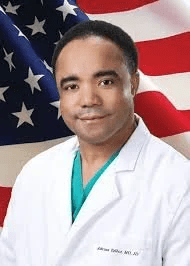
Ronald Chapman II is the founder of Chapman, Dowling & Mallek and a top-rated Michigan federal criminal defense attorney who represents clients in federal courts nationwide. His practice is focused on defending individuals and organizations in complex federal prosecutions, including white-collar criminal matters and healthcare fraud investigations.
Throughout his career, Mr. Chapman has helped clients avoid more than $550 million in potential penalties, primarily in cases involving physicians, healthcare providers, executives, and professionals facing federal charges. He is widely recognized for his work as a Michigan healthcare fraud defense attorney, as well as for his results in white collar criminal defense in Michigan, where cases often involve parallel civil, regulatory, and criminal exposure.
Apr-8-2026
Hospice fraud is a serious enforcement priority for Medicare, and federal regulators are under pressure...
Apr-2-2026
In federal court, some of the most important battles happen after trial—on appeal—where the focus...

Jan-9-2026
Memphis, Tennessee – The verdict returned this week in United States v. Sanjeev Kumar closed...
Dec-31-2025
Dr. Lonnie Joseph Parker, a Texarkana physician, was recently convicted in federal court of unlawfully...
Serving Clients Nationwide.
Chapman, Dowling & Mallek is headquartered in Detroit, Michigan and represents clients in federal investigations and criminal matters across the United States. Our attorneys handle complex federal cases nationwide while maintaining offices in Michigan and other states.
456 E. Milwaukee, Detroit, MI 48202
10 Comments
Dear Mr. Chapman,
I am writing to extend my deepest commendation for your exceptional article, "United States v Talbot: A Veteran of Creative Suffering." Your meticulous and heartfelt narrative not only highlights the tragic journey of Dr. Adrian Talbot but also serves as a powerful critique of the justice system's handling of his case.
Your ability to convey the complexities of Dr. Talbot's life, from his early years in Guyana to his distinguished service in the U.S. Navy and his dedicated work in addiction medicine, is truly commendable. The depth of your research and the sensitivity with which you portrayed Dr. Talbot's character, sacrifices, and struggles is profoundly moving.
The personal anecdotes, such as the recollections from Dr. Talbot's wife and the testimonies of his patients, add a deeply human touch to your narrative. Your writing is both engaging and evocative, drawing readers into the emotional depths of Dr. Talbot's life and the systemic injustices he faced. The detailed recounting of the trial proceedings and the exclusion of critical evidence evoke a strong sense of indignation and sympathy, highlighting the urgent need for justice and compassion within our legal system.
Furthermore, your sensitive portrayal of Dr. Talbot's mental health struggles, particularly his dementia caused by exposure to toxic water at Camp Lejeune, adds an important dimension to the story. You have honored Dr. Talbot's legacy and service to his community with great respect and dignity.
In conclusion, your article is a testament to your exceptional writing skills and your deep commitment to justice. "United States v Talbot: A Veteran of Creative Suffering" is not just a tribute to Dr. Talbot, but also a call to action for a more humane and fair legal system. Thank you for bringing this important story to light with such eloquence and compassion.
Neil Anand
Eloquent powerful truth.
This needed to be said.
Thank you Mr. Chapman.
And thank you Dr. Talbot, for your kindness, compassion, and selfless service to our country and all humanity.
- James Patrick Murphy, MD
This detailed trail of Dr. Talbot's trials, both humanitarian and unjust federal-government targeting, is eloquently told. What is unseemly, inelegant and just plain vicious are federal MISjudges, federal PERsecutors, and all other government OxyMORONs.
If there is a scintilla of decency, a jot of justice, a miniscule knowledge of the profession of medicine among FEDERAL PERSECUTORS, I have yet to find it. HOW IN THE EFFING WORLD TO YOU EVEN PUT ON TRIAL A PATIENT WITH A SEVERELY DETERIORATING CEREBRUM hence THE INABILITY TO REMEMBER ANYTHING, ERGO UNABLE TO DEFEND HIMSELF? WHEN WILL
FEDERAL POLICE (DEA) AND FEDERAL LAWYERS (DOJ) GET THE HELL OUT OF MEDICAL PRACTICE WHICH THEY ARE TOO STUPID TO COMPREHEND THE LEAST OF IT? Finally, as the WRITER of "AMERICAN AGONY: THE OPIOID WAR AGAINST PATIENTS IN PAIN", I EXPOSED THESE INCOMPETENT FEDS, especially in the Chapter "THE WRONG ARMS OF THE LAW". This book at AMAZON exposes, in detail, the suffering the CDC, VA, DOJ, DEA have inflicted on millions of pain patients and thousands of physicians, over 3000 imprisoned across America. As a REGISTERED NURSE, intimately knowledgeable about the value of opiates and opioids to assuage various levels of pain, I am sickened to nausea about America's NONphysicians VICTIMIZING SUFFERING PATIENTS AND IMPRISONING VALIANT PHYSICIANS. I am
Helen Borel,RN,BA,MFA,PhD
We must get the CSA (Controlled Substance Act) repealed. No drug causes addiction. The War on Drugs was created as a racist agenda to disenfranchise minorities. Now it is simply being used to steal money from doctors to pay salaries in the DOJ and maintain a defunct agency. We hold the key to end this on Doctorsofcourage.org. We explain the REAL cause of drug abuse. By not recognizing this and addressing it, the addiction rate is growing exponentially, now doubling every 6 years. By 2030, the rate could be at 10%. Ending the war on drugs will end the overdoses, the black market, the wasted tax dollars, and the border crisis.
What a tragic way for any nation to treat a veteran with his service record. I am ashamed of my country and must say I will not look at my uniforms the same. Honor, integrity, and loyalty, used to go both ways. The government has broken its bond with the people. Something must change, or we are all lost.
Omg Ron. I’m so sorry this happened to not only your client, but your friend. What can we do to help, beyond what we are already doing? I’ve been ignored by my legislators for a decade now. I never imagined in my wildest dreams when I started this work a decade ago, that in 2024, things would be worse.
I’ve noticed recently that most of the doctors I see online who are being prosecuted are non-white and seem to be immigrants. Has anyone studied the numbers on this?
Thanks.
Just reading this-has brought me to tears!
I am a retired RN who worked the hospital setting at a time where patients were treated humanely. Now, our MD’s are imprisoned for what? Overprescribing? Who gets to make that decision? I thought it was between Doctor and Patient. Dr.Talbot is a hero! We have the wrong people making wrong decisions for our MD’s and our.Veterans.
Who gets a fair trial? Our Government, DOJ, The CDC, and the DEA are bullies!!
I pray for Dr. Talbot. He should be out of prison! I am ashamed of our Country.
I pray that people in power-come to their senses! Sincerely, Kathleen Clark, RN (retired).
First of all this brought me to tears. But now it has me dam mad. Thank you Dr Adrian Talbot for your kind and passionate service to humanity and our country. So glad I found this article thank you for writing it Mr Chapman Dr Talbot does not belong in prison he needs medical care. What the hell has happened to our Justice system God Bless you Dr Talbot for all you done for me. Rena M Boley