
What Really Happens at a Federal Criminal Appeal? Inside a Recent Oral Argument
Insights from White Collar Criminal Defense Attorneys Trusted Nationwide
In federal court, some of the most important battles happen after trial—on appeal—where the focus shifts from emotion and witnesses to law, precision, and strategy.
I recently argued a federal criminal appeal before the United States Court of Appeals, and the issues at stake highlight just how critical appellate advocacy can be.
You can listen to the oral argument here:
Audio PlayerAt its core, this case involved a physician prosecuted under federal drug laws—specifically allegations tied to controlled substances and conspiracy. But on appeal, the case became something much more significant:
One of the primary issues on appeal was sufficiency of the evidence.
At trial, the government often benefits from momentum—charts, witnesses, and narratives. But on appeal, the question becomes far more disciplined:
Could any rational juror, applying the law correctly, have found guilt beyond a reasonable doubt?
That’s a much higher bar than most people realize.
We also raised the issue of competency to stand trial, one of the most sensitive areas in criminal law.
The Constitution requires that a defendant:
If that standard isn’t met, the trial itself is fundamentally flawed.
This issue often gets overlooked—but when it’s present, it can reshape the entire case.
Federal conspiracy law is powerful—sometimes too powerful.
In this case, we challenged whether the government had improperly extended conspiracy liability under 21 U.S.C. § 846, particularly in the context of medical practice.
The concern is simple:
When does coordination become conspiracy—and when does lawful conduct get swept into criminal liability?
This is a growing issue, especially for professionals operating in regulated industries like healthcare.
Perhaps the most troubling issue was the exclusion of co-defendant testimony regarding medical diagnosis.
The jury never heard evidence that went directly to:
When key defense evidence is excluded, the trial risks becoming one-sided—and that’s exactly what appellate courts are supposed to prevent.
The issues are tested before a panel of three judges. The judges often interrupt. They test your theory. They push the weakest points in your case.
And that’s the point.
The goal is not to repeat your brief—but to:
If you or someone you know is facing a federal criminal conviction, here’s the reality:
The trial is not the end of the road.
Appeals can uncover:
But timing, strategy, and issue selection are everything.
If you have questions about a federal appeal or believe errors occurred in your case, feel free to reach out. Understanding your options early can make all the difference.
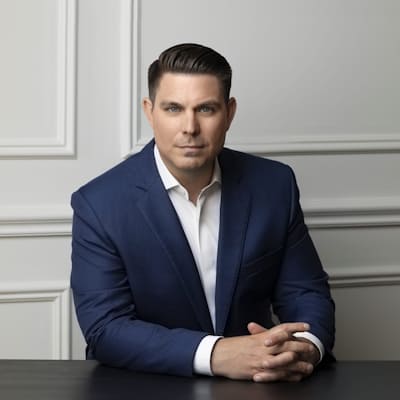
Ronald Chapman II is the founder of Chapman, Dowling & Mallek and a top-rated Michigan federal criminal defense attorney who represents clients in federal courts nationwide. His practice is focused on defending individuals and organizations in complex federal prosecutions, including white-collar criminal matters and healthcare fraud investigations.
Throughout his career, Mr. Chapman has helped clients avoid more than $550 million in potential penalties, primarily in cases involving physicians, healthcare providers, executives, and professionals facing federal charges. He is widely recognized for his work as a Michigan healthcare fraud defense attorney, as well as for his results in white collar criminal defense in Michigan, where cases often involve parallel civil, regulatory, and criminal exposure.
Apr-8-2026
Hospice fraud is a serious enforcement priority for Medicare, and federal regulators are under pressure...
Apr-2-2026
In federal court, some of the most important battles happen after trial—on appeal—where the focus...
Jan-9-2026
Memphis, Tennessee – The verdict returned this week in United States v. Sanjeev Kumar closed...
Dec-31-2025
Dr. Lonnie Joseph Parker, a Texarkana physician, was recently convicted in federal court of unlawfully...
Serving Clients Nationwide.
Chapman, Dowling & Mallek is headquartered in Detroit, Michigan and represents clients in federal investigations and criminal matters across the United States. Our attorneys handle complex federal cases nationwide while maintaining offices in Michigan and other states.
456 E. Milwaukee, Detroit, MI 48202