Michigan Healthcare Fraud Defense Attorney
Chapman, Dowling & Mallek Federal Criminal Defense Attorneys Michigan

Chapman, Dowling & Mallek Federal Criminal Defense Attorneys Michigan
Need help now? Call our Michigan healthcare fraud defense attorneys today
Physicians, practice owners, and healthcare professionals across Michigan trust us because we understand federal healthcare enforcement, we move fast to protect careers, and we focus on securing the best result with minimal disruption to your life.
888-826-7981
A single billing discrepancy—a misapplied code, an administrative oversight—can set a federal investigation in motion. In the current enforcement climate, healthcare fraud is not treated as a paperwork problem. It is a criminal matter, pursued aggressively by both state and federal authorities with substantial investigative resources behind them.
For physicians, pharmacists, and healthcare executives, the stakes are existential. A conviction does not merely result in fines. It ends careers, eliminates licenses, and carries the real possibility of federal incarceration. When government investigators have your practice in their sights, the only appropriate response is experienced, strategic defense. That is what Chapman, Dowling & Mallek provides.
Healthcare fraud defense sits at the intersection of federal criminal law, state statutes, administrative regulation, and civil liability. Chapman, Dowling & Mallek defends individuals and organizations accused of improperly obtaining payments from Medicare, Medicaid, private insurers, or patients through conduct the government characterizes as deceptive or fraudulent.
From a legal standpoint, healthcare fraud involves any scheme designed to:
These cases rarely involve a single charge. Most defendants face exposure under multiple overlapping legal theories simultaneously—federal statutes including the False Claims Act, the Anti-Kickback Statute, and healthcare-specific fraud provisions, alongside Michigan criminal law.
Chapman, Dowling & Mallek represents clients across the full spectrum of healthcare:

Healthcare fraud allegations in Michigan frequently involve:
It is worth noting that intent is not always a prerequisite for investigation. Billing errors that appear systemic—even when entirely unintentional—can attract government scrutiny. Early legal intervention is critical.
The penalties for healthcare fraud conviction are severe by design:
Key statutes governing these cases include:
This statute makes it a federal crime to knowingly and willfully execute, or attempt to execute, a scheme to defraud any healthcare benefit program or to obtain, by means of false or fraudulent pretenses, any money or property owned by, or under the custody of, any healthcare benefit program. The penalties for violating this statute include a fine, imprisonment up to 10 years, or both. If the violation results in serious bodily injury, the imprisonment can be up to 20 years, and if the violation results in death, the violator can be sentenced to life imprisonment.
This statute makes it a federal crime to knowingly and willfully falsify, conceal, or cover up by any trick, scheme, or device a material fact, or make any materially false, fictitious, or fraudulent statement in connection with the delivery of or payment for healthcare benefits, items, or services. The penalty for violating this statute includes a fine, imprisonment up to 5 years, or both.
This statute makes it a crime to embezzle, steal, or otherwise, without authority, knowingly convert to the use of any person other than the rightful owner, or intentionally misapply any of the moneys, funds, securities, premiums, credits, property, or other assets of a healthcare benefit program. The penalties for violating this statute include a fine, imprisonment for up to 10 years, or both.
This federal law prohibits the exchange (or offer to exchange) of anything of value in an effort to induce (or reward) the referral of federal healthcare program business. Violations of the Anti-Kickback Statute can result in imprisonment up to 5 years, a fine up to $25,000, or both. Violators can also be subject to three times the amount of damages sustained by the government.
This statute allows for penalties of $5,500 to $11,000 per false claim, and triple the amount of the government’s damages.

These investigations are coordinated efforts across multiple agencies. Key players include:
Need help now? Call our Michigan healthcare fraud defense attorneys today
Physicians, practice owners, and healthcare professionals across Michigan trust us because we understand federal healthcare enforcement, we move fast to protect careers, and we focus on securing the best result with minimal disruption to your life.
888-826-7981
Healthcare fraud prosecutions are among the most technically complex in federal criminal law. Chapman, Dowling & Mallek brings:
Ronald W. Chapman II offers not just hope but tangible results. With a storied history of acquittals and favorable outcomes, Chapman’s defense strategies are tailored, tenacious, and tested. His victories span across a spectrum of healthcare fraud cases, affirming his position as a preeminent defense attorney in this complex field.
Choosing Ronald W. Chapman II means opting for a defense grounded in thorough investigation, personalized strategy, and an unwavering commitment to your rights and future. Understanding the gravity of healthcare fraud charges, Chapman employs his extensive knowledge and strategic acumen to navigate each case towards the best possible outcome, ensuring that your side of the story is heard, respected, and effectively represented.
The fight against Medicare fraud is a top concern for the Justice Department, leading to the mobilization of various agencies, including the notable Medicare Fraud Strike Force. The Strike Force operates in Detroit, Houston, Miami, and other areas. In these areas, charges for health care fraud are much more common.
Click to read about recent health care fraud prosecution statistics
Unfortunately, this rigorous scrutiny often ensnares healthcare providers who may unknowingly deviate from compliance or engage in non-fraudulent activities. Experts with backgrounds in both State and Federal Medicare fraud analysis spearhead investigations, armed with the knowledge to both identify potential fraud and strategize defenses effectively.
Key Players in Medicare Fraud Investigations
The landscape of federal enforcement against Medicare fraud is vast, involving numerous entities. Investigations might kick off with a MAC audit, alerting the Office of Inspector General (OIG) upon suspicion, underscoring the critical nature of MAC audits for providers. Local US Attorney’s offices, the FBI, and UPICs contracted by Medicare also play pivotal roles, with UPICs analyzing data for anomalies in billing practices that could indicate fraudulent activities.
Proven strategies that lead to success in healthcare fraud cases.
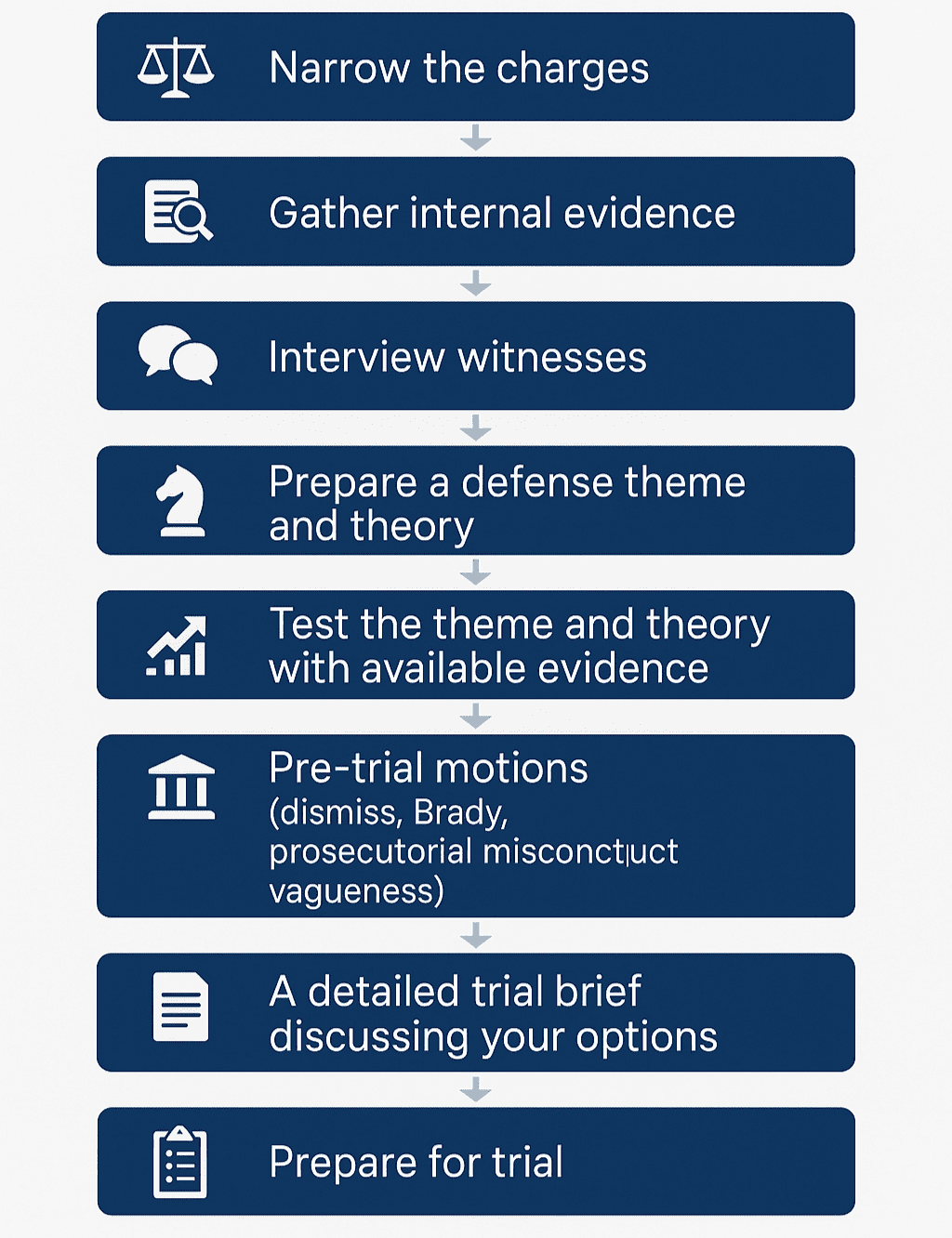
Defending charges of healthcare fraud, requires a sophisticated defense by defense council who are prepared and experienced in defending healthcare fraud charges.
Unfortunately, most attorneys who do not regularly practice in the healthcare fraud arena do not understand the complexities of medical billing requirements, Medicare rules and regulations such as LCDs and NCD. Many attorneys also don’t understand the complex decisions in Supreme Court and district court cases related to healthcare fraud.
Without such an investigation, a defendant has no chance of a trial victory, or of securing a deal that they are satisfied with. Many attorneys lack the resources the knowledge and the desire to aggressively attack the government’s theory in order to improve a healthcare, fraud, defendants case posture.
While each and every defense of a case is unique, many healthcare, fraud, allegations have been repeated time and time again by the government. The government typically recycles, similar theories and similar cases. Having significant experience defending healthcare fraud charges across the country Ron has become familiar with these theories and can spot them coming a mile away. This helps a provider posture, their defense around that theory to achieve victory.
The Federal Sentencing Guidelines for health care fraud in the United States are part of the broader Federal Sentencing Guidelines, which are designed to provide a framework for sentencing individuals convicted of federal crimes, including health care fraud. Health care fraud can encompass a wide range of activities, such as billing for services not rendered, billing for more expensive services than those actually provided, or performing unnecessary services for the purpose of billing. The specific guidelines for health care fraud are detailed in the Guidelines Manual.
The calculation of sentences under the Federal Sentencing Guidelines involves a two-step process:
Sentences for health care fraud can vary widely based on the specifics of the case, including the amount of loss, the defendant’s criminal history, and other factors mentioned above. Sentences can range from probation for cases involving lower amounts of loss and no prior criminal history, to several years in prison for cases involving significant loss or harm to victims.
It’s important to note that while the Federal Sentencing Guidelines provide a framework, judges do have discretion to impose sentences outside these guidelines under certain circumstances. This can include considerations of the defendant’s history, cooperation with authorities, the impact of the fraud on victims, and other factors.
When a grand jury target letter, OIG subpoena, CID, or DOJ healthcare fraud investigation lands, speed matters. Ronald W. Chapman II immediately narrows subpoena scope, protects privileged records, and negotiates production timelines. We conduct a parallel internal review (billing, CPT/HCPCS coding, medical necessity support, referral arrangements) to identify defenses early and avoid charges. If agents executed a search warrant at your clinic, pharmacy, lab, or telemedicine operation, we move to challenge overbroad seizure, secure a return of critical business property, and pursue an early proffer only when it helps—not because the government demands it. Ron is President of the Safe Harbor Group. The Safe Harbor Group team of professionals includes former government investigators who have worked for Medicaid Fraud Control Units, major insurance companies, and state boards of medicine.
This gives our clients an edge when facing healthcare fraud investigations, as our team has firsthand knowledge of how these investigations are conducted and what the government is looking for in terms of evidence.
In False Claims Act (FCA) and qui tamcases, the government must prove materiality and scienter (intent). We attack those elements: many disputes are honest billing/coding disagreements or ambiguous LCD/NCD rules—not fraud. For Anti-Kickback Statute (AKS) and Stark Lawtheories, we build safe-harbor and exception defenses (fair market value, commercial reasonableness, group practice, personal services, space/equipment leases).
We also address alleged remuneration (consulting, speaker fees, marketing, ownership interests) with compliance documentation and expert valuation. On damages, we challenge multipliers and push for dismissal or favorable resolution before trial.
RAC, UPIC/ZPIC, TPE, and commercial payer audits can spiral into criminal exposure if mishandled. Chapman’s approach: fix the audit record first. We rebut extrapolation with statistical experts, shore up medical necessity and documentation, and pursue ALJ appeals while negotiating to lift payment suspensions. If auditors refer your case to law enforcement, your audit file becomes your first line of criminal defense—so we make it strong and consistent.
We also contest CMS overpayment demands, coding edits, and alleged unbundling/incident-to issues, and align your compliance narrative across agencies.
If charges are filed—healthcare fraud, wire fraud, conspiracy, AKS—we try the case like it matters, because it does. We attack intent and materiality, exclude unreliable sampling and expert testimony (Daubert), and use defense experts (coding, FMV, compliance) to show your decisions were reasonable. Jury instructions and Rule 29/33 motions are built in from day one to preserve appellate issues.
If there’s a conviction, we fight loss calculations, argue for variances under 18 U.S.C. § 3553(a), and pursue appeals focused on evidentiary error, jury instruction defects, or prosecutorial overreach. Chapman’s track record of federal wins reflects meticulous prep and relentless advocacy.
❝
The members of the jury would light up whenever Ron was going to speak. His performance in the courtroom was remarkable. He was always professional, polite to a fault, quick-to-the-point, thoughtful, and never missed an opportunity to take advantage of a mistake made by the prosecution or the judge. During the recesses, his performance was the talk of the courtroom. Everyone was in awe and wanted him to be their attorney.
❝
Very few lawyers win against the Feds. This is who you want on your side in a federal courtroom! He wins at a high percentage because he is extremely prepared for trial and knows exactly what he is doing and how to offset or rebut anything prosecutors may try.
Defense in cases involving healthcare fraud, false claims, and regulatory violations.
Chapman, Dowling & Mallek represents clients in all federal criminal and white collar defense matters throughout the State of Michigan.
Federal prosecution in the Eastern & Western Districts of Michigan is not abstract. It means investigators who have spent years building a case, prosecutors with institutional resources, and charges that carry decades of exposure. Ronald Chapman II has stood in those courtrooms — and won.
Representative federal trial matters in Michigan include:
United States v. B. (E.D. Michigan 2022)
Defense acquittal of five physicians accused in a $550 million healthcare fraud and opioid prescribing prosecution. After trial, the jury returned verdicts clearing the doctors of all charges.
United States v. P. (E.D. Michigan 2022)
Federal jury acquittal of a pain specialist accused of operating a $6 million opioid prescribing scheme. The defense demonstrated that the physician’s prescribing practices fell within legitimate medical judgment.
The resources below provide additional information about federal crime representation in Michigan, including pages addressing specific federal offenses, investigations, and related defense matters handled by our attorneys.

CEO, Federal Attorney
Focus Areas: Healthcare Fraud, Fraud Crimes, White Collar Criminal Defense Federal & Government Investigations

Federal Attorney
Focus Areas: White Collar Criminal Defense Federal & Government Investigations Financial & Corporate Crime Tax & Financial Institution Crime
Countless Quiet Resolutions
188 Federal Acquittals
Federal cases successfully defended — often before any public filing or charge.
United States v. J. O.
Month‑long “pill‑mill” trial; jury returned not‑guilty on all counts; assets later returned.
Michigan (State) Full Acquittal
United States v. Q.
Felony opioid charges resolved by plea to misdemeanor false entry in a medical record.
Michigan (State) Misdemeanor Plea
Ron’s meticulous approach, combined with a relentless commitment to his clients, has led to precedent-setting victories that have reshaped federal healthcare fraud and white-collar criminal defense.

Record-setting trial victories in high-stakes federal cases have earned Ron national recognition among peers and clients alike. His results in complex white collar investigations demonstrate strategic mastery and courtroom precision. Learn more about Ronald Chapman II

Frequently featured on national media, Ron is a respected voice breaking down high-profile federal cases. His insight and clarity have made him a trusted analyst for complex legal and policy issues. See Ronald in the Media

Ron is the author of two acclaimed books on federal defense and investigations — essential reading for attorneys and professionals navigating the federal justice system. Explore Ronald's Books

When the federal government is investigating you, your freedom, career, and reputation are at stake. Clients across Michigan choose Chapman, Dowling & Mallek because everything we do is designed to protect their future, not ours.
1 Benefit from Deep Federal Experience
You get a defense strategy shaped by years of real outcomes in Michigan federal courts, giving you a stronger, more informed position from day one.
2 Focus on Federal & White Collar Defense
You’re represented by a team that spends 100% of its time studying federal law, agencies, and prosecutor; giving you a sharp precise defense.3 Inside Perspective of Former Prosecutors
You get insight into how the government builds its case, allowing us to anticipate their tactics and dismantle their strategy before it harms you.
4 Immediate Answers Privately and at No Cost
Call or visit our Detroit, Michigan office. You get clarity, direction, and a plan without delay critical when federal agents are already moving.
Speak directly with a federal attorney — available 24/7 for calls or texts.