
Dr. Parker’s Pill Mill Case Reaches the Supreme Court: Implications for Healthcare & White Collar Criminal Defense
Insights from White Collar Criminal Defense Attorneys Trusted Nationwide
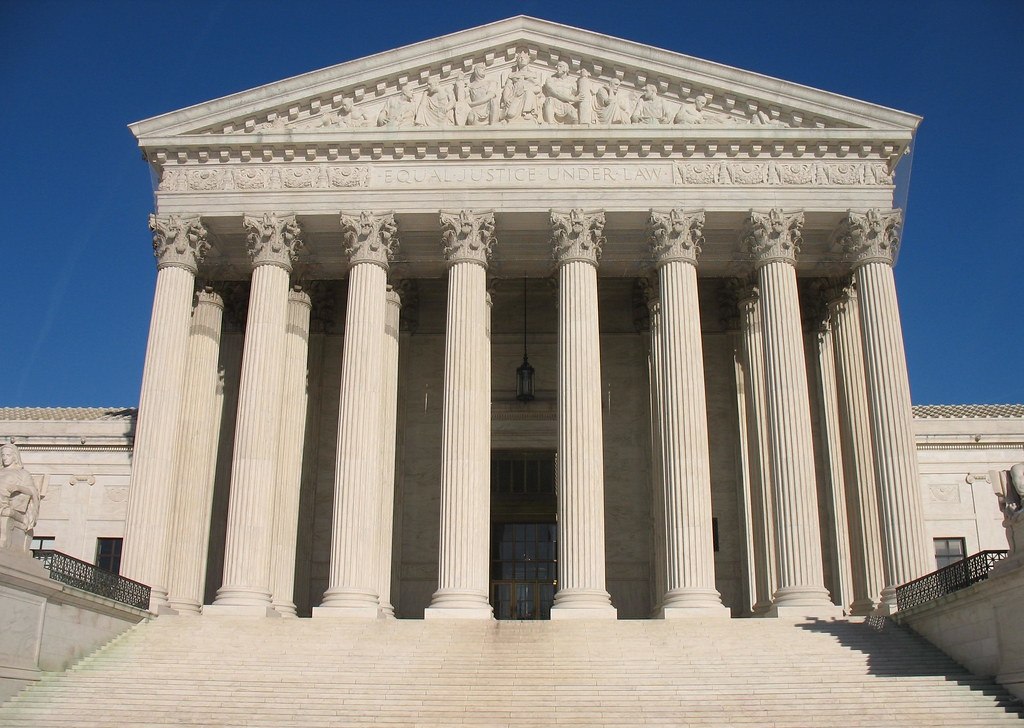
Dr. Lonnie Joseph Parker, a Texarkana physician, was recently convicted in federal court of unlawfully prescribing opioids – a so-called “pill mill” prosecution.
He received a 7-year sentence after a jury found him guilty on four counts of distributing controlled substances outside the usual course of professional practice. Notably, the jury declined to hold him responsible for a patient’s death and even acquitted him on one prescribing count, underscoring the nuanced facts of his case.
Dr. Parker turned to Ronald W. Chapman II to handle his appeal and his case is now before the Supreme Court.
Now in his 60s, Dr. Parker has become a focal point in the battle over how far federal law can reach into medical judgment. His case – and the ensuing appeal – raise critical issues for healthcare defense and white collar criminal defense attorneys who represent physicians. Dr. Parker’s Supreme Court petition for certiorari seeks to clarify the law on what separates a well-meaning doctor from a felon.
This article examines Dr. Parker’s case, the Supreme Court petition it prompted, and how attorney Ronald W. Chapman II’s advocacy on behalf of physicians – both in trial courts and the Supreme Court – is shaping the future of physician defense in healthcare-related white collar cases.
In 2019, federal agents suspected Dr. Parker of running a “pill mill” – a clinic prescribing high volumes of opioids for profit. The investigation began after a patient, N.C., was found driving impaired with numerous pill bottles from Dr. Parker and later died in custody. The DEA raided Parker’s Arkansas clinic and seized patient files, which an expert pain-management doctor reviewed for signs of improper prescribing. In 2022, Dr. Parker was indicted on multiple counts of distributing oxycodone and codeine cough syrup “outside the usual course of professional practice and without a legitimate medical purpose,” in violation of the federal Controlled Substances Act (CSA). He was also charged with an enhancement for the death of patient N.C.
After an eight-day trial, the jury delivered a mixed verdict. Dr. Parker was acquitted of causing the patient’s death and one prescribing count, but convicted on four distribution counts involving oxycodone and promethazine with codeine. Jurors heard from 16 witnesses, including the DEA’s expert Dr. Mark Rubenstein, who testified that Dr. Parker violated Arkansas’s pain management regulations – for example, by failing to perform thorough physical exams and by prescribing powerful narcotics in excessive amounts or without proper justification. In essence, the government argued Dr. Parker abused his position of trust as a physician by prescribing opioids “for personal gain, rather than for the benefit of patients”. The prosecution painted him as a doctor whose clinic breached accepted standards – a portrayal common in federal “pill mill” cases.
At sentencing, the trial judge adopted a tough stance, initially calculating a high guideline range by counting not just the charged prescriptions but also uncharged prescriptions as relevant conduct. Ultimately, the court varied downward and imposed 87 months (7¼ years) in prison, noting it would have given the same sentence regardless of the disputed calculations. Dr. Parker, who had practiced medicine for decades in a rural community, now faced the label of a felon. However, his defense did not end at trial. He appealed to the Eighth Circuit, arguing insufficient evidence and flawed jury instructions, especially regarding how the jury was told to determine what is “unauthorized” prescribing under the CSA. This appeal has now set the stage for a potential landmark ruling affecting healthcare fraud defense nationwide.
After the Eighth Circuit affirmed his conviction in August 2025 – finding the evidence sufficient and no reversible error in the instructions – Dr. Parker escalated his fight to the U.S. Supreme Court. His defense team, led by Ronald W. Chapman II, filed a petition for certiorari raising a fundamental question: “Whether a doctor can be convicted of unlawfully prescribing controlled substances based on a deviation from the standard of care in a single state.” In other words, can the federal government criminalize a physician’s conduct merely because it fell short of one state’s medical criteria, even if those practices might be acceptable elsewhere?
This question strikes at a core ambiguity in the Controlled Substances Act’s requirements for doctors. The CSA makes it unlawful to “knowingly or intentionally” distribute a controlled substance without authorization – and a prescription is authorized only if issued “for a legitimate medical purpose” by a practitioner acting “in the usual course of professional practice”. However, the law does not define what the “usual course of professional practice” entails. At Dr. Parker’s trial, the judge instructed the jury that those terms “mean acting in accordance with appropriate criteria for prescribing controlled substances in the State of Arkansas.” In effect, the jurors were told to measure Dr. Parker against Arkansas’s standards for proper prescribing. Dr. Parker’s appellate brief argued this was too narrow. Criminality cannot rest on an interpretation of State regulations he must be shown to be unlawfully prescribing against Federal Criminal standard that is clear and unambiguous. Otherwise, a doctor could be imprisoned for conduct that 49 other states might deem acceptable medical practice, which raises serious fairness and uniformity concerns.
The Eighth Circuit, however, disagreed. It noted that nothing in the CSA explicitly requires a national standard for “usual course” and that the recent Supreme Court precedent in Ruan v. United States (2022) did not forbid referencing state law. In Ruan, the Supreme Court clarified that physicians cannot be convicted under §841(a) without proof that they knowingly or intentionally acted outside the scope of authorization. That ruling was a major win for doctors, establishing a mens rea (state of mind) safeguard: prosecutors must prove the doctor knew their prescribing was not in line with legitimate practice. Yet, Ruan left open the definition of what counts as “legitimate medical purpose” or “usual course” – effectively, what standard the doctor’s conduct is measured against. Dr. Parker’s Pill Mill case shows that this unresolved issue is now front and center. His petition argues that allowing each state’s medical board rules or guidelines to define criminal conduct under a federal law leads to arbitrary justice . A practitioner in Arkansas could be imprisoned for actions that a jury in another state might find lawful – a disparity ill-suited to a uniform federal law.
This ambiguity has broad ramifications for physician defense. For example, after Ruan, some federal circuits have continued to apply extremely strict or “disjunctive” interpretations of the CSA’s phrase, making it easier to prosecute doctors. The Eleventh Circuit – in a case involving a Florida doctor (Dr. Lubetsky) – upheld a view that a prescription can be unlawful if either the doctor lacked a legitimate purpose or deviated from usual practice, effectively lowering the bar for conviction. That persistent split in how courts read the law means physicians nationwide still lack clarity on how to avoid criminal liability. Dr. Parker’s Supreme Court petition aims to resolve this confusion. If the High Court takes the case, it could decide whether a single state’s standard of care can send a doctor to prison under federal law, or whether a more uniform, physician-friendly standard (such as widely accepted medical practices or federal guidance) must govern. Such a ruling would impact every prescriber in America, especially those in pain management and other areas heavily scrutinized by the DEA.
The appeal was brought by Attorney Ronald W. Chapman II and John Dowling. Ron is a former federal prosecutor and U.S. Marine Corps Judge Advocate, who serves as Dr. Parker’s counsel of record in the Supreme Court petition.
This is not Mr. Chapman’s first foray into the Supreme Court on behalf of medical professionals. In Ruan v. United States – the very case that set the current legal framework – Mr. Chapman authored an amicus curiae brief urging the Court to adopt a strong mens rea requirement to protect well-intentioned doctors. His brief emphasized that eliminating a doctor’s “good faith” defense would “eliminate the mental aspect of what makes up a criminal act,” warning that honest mistakes in prescribing could be criminalized. The Supreme Court’s unanimous Ruan decision in 2022 aligned with this view, holding that physicians cannot be convicted under the CSA without proof they knowingly deviated from legitimate practice.
Mr. Chapman has remained at the forefront of national advocacy on these issues. Now, as lead counsel for Dr. Parker, he is pushing the Court to further refine the law by addressing the standard of care question.
His Supreme Court advocacy extends beyond Dr. Parker’s Pill Mill case as well. Chapman, Dowling & Mallek recently filed another certiorari petition – for Dr. Mark Lubetsky in the Eleventh Circuit – challenging the inconsistent interpretations of “usual course of practice” after Ruan. In Dr. Lubetsky’s petition, Chapman argues that ambiguous and overly stringent standards are chilling legitimate medical care, as physicians fear that any deviation from ill-defined norms could land them in prison. By taking up such cases, Mr. Chapman is not only defending individual clients but also shaping precedent at the highest level of the judiciary. His goal is to ensure that federal healthcare laws are applied fairly – distinguishing true criminal conduct (e.g. doctors knowingly acting as drug dealers) from good-faith medical judgment that might simply fall outside rigid guidelines. This commitment to advocacy in the Supreme Court underscores why Mr. Chapman is a leading voice in white collar criminal defense for healthcare providers.
Ronald Chapman II’s dedication to defending medical professionals is equally evident in the trial courts, where he has compiled a remarkable record of acquittals for physicians facing white collar criminal charges. These courtroom victories demonstrate that with a robust defense, juries often recognize the difference between criminal conduct and legitimate medical practice. A few noteworthy examples include:
Each of these outcomes underscores a crucial point: physicians can successfully defend against “unlawful prescribing” or healthcare fraud charges with the right legal strategy. Juries are often receptive to detailed explanations of medical decision-making, especially when prosecutors rely on ambiguous standards or assume that deviations equal crimes. Mr. Chapman’s approach – leveraging expert testimony, challenging unreliable government analytics, and humanizing the doctor-patient context – has proven extraordinarily effective. It has earned him national recognition among white collar criminal defense attorneys in the healthcare field.
For doctors, these victories and Dr. Parker’s ongoing fight are more than just news; they are precedents and lessons. They show that “hunted healers” can be defended and that the law is still evolving to find the right balance between curbing drug abuse and respecting medical judgment. Chapman, Dowling & Mallek’s successes – from trial acquittals to Supreme Court advocacy – are helping reshape the legal landscape so that good doctors are not criminalized for difficult clinical decisions.
Dr. Parker’s Supreme Court bid represents a pivotal moment for healthcare practitioners and their defense counsel. If the Court takes up his case, its decision could bring much-needed clarity to controlled substance prescribing laws, ensuring that doctors are judged by fair and consistent standards rather than by a patchwork of state rules. Such clarity would bolster the confidence of well-intentioned physicians that they can treat patients without facing unwarranted prosecution – a particularly important development amid the ongoing opioid crisis and its legal fallout.
Meanwhile, the work of attorneys like Ronald W. Chapman II highlights the importance of a vigorous defense in white collar healthcare cases. From achieving full acquittals for physicians in Kentucky, Michigan, and beyond, to championing their cause in the halls of the Supreme Court, Mr. Chapman’s efforts embody a professional and relentless commitment to justice for medical practitioners. His dual expertise – as a healthcare fraud defense strategist in trial courts and a thought leader in appellate courts – is helping to ensure that the line between criminal conduct and medical judgment is drawn correctly.
For healthcare providers accused of running a “pill mill” or facing any federal investigation, these developments carry a clear lesson: an aggressive, knowledgeable defense can make all the difference. As the law continues to evolve in response to cases like Dr. Parker’s, physicians and their counsel must stay informed and proactive. The stakes – a doctor’s livelihood, liberty, and reputation – could not be higher. But with experienced white collar criminal defense attorneys leading the charge, there is hope that justice and compassion will prevail for those who have dedicated their lives to healing.
Sources: Dr. Parker’s case background and appellate details; Eighth Circuit opinion in United States v. Parker; Parker’s Supreme Court Petition ; Ruan v. United States discussion; Chapman’s role and quotes in advocacy; Trial acquittal reports for Dr. Pompy and Dr. Kousa ; Chapman, Dowling & Mallek case result highlights.
Ronald Chapman II is the founder of Chapman, Dowling & Mallek and a top-rated Michigan federal criminal defense attorney who represents clients in federal courts nationwide. His practice is focused on defending individuals and organizations in complex federal prosecutions, including white-collar criminal matters and healthcare fraud investigations.
Throughout his career, Mr. Chapman has helped clients avoid more than $550 million in potential penalties, primarily in cases involving physicians, healthcare providers, executives, and professionals facing federal charges. He is widely recognized for his work as a Michigan healthcare fraud defense attorney, as well as for his results in white collar criminal defense in Michigan, where cases often involve parallel civil, regulatory, and criminal exposure.

Apr-8-2026
Hospice fraud is a serious enforcement priority for Medicare, and federal regulators are under pressure...
Apr-2-2026
In federal court, some of the most important battles happen after trial—on appeal—where the focus...

Jan-9-2026
Memphis, Tennessee – The verdict returned this week in United States v. Sanjeev Kumar closed...
Dec-31-2025
Dr. Lonnie Joseph Parker, a Texarkana physician, was recently convicted in federal court of unlawfully...
Serving Clients Nationwide.
Chapman, Dowling & Mallek is headquartered in Detroit, Michigan and represents clients in federal investigations and criminal matters across the United States. Our attorneys handle complex federal cases nationwide while maintaining offices in Michigan and other states.
456 E. Milwaukee, Detroit, MI 48202