
SCOTUS Delivers Blow to Colorado “High” Court
Insights from White Collar Criminal Defense Attorneys Trusted Nationwide
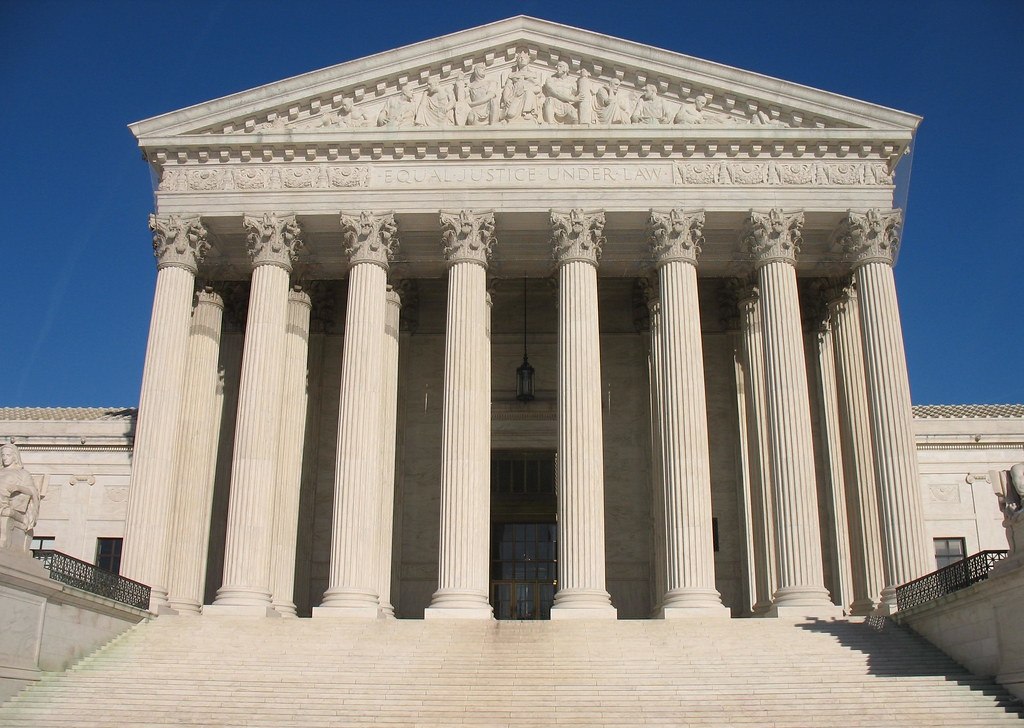
The Supreme Court, in a unanimous decision, reversed the Colorado Supreme Court’s ruling which had ordered that Donald J. Trump be excluded from the 2024 presidential primary ballot based on Section 3 of the Fourteenth Amendment. The Court held that the responsibility for enforcing Section 3 against federal officeholders and candidates rests with Congress, not the States. Therefore, Colorado’s action to disqualify Trump from the ballot was found to be beyond the state’s authority. All nine Justices agreed with the outcome, emphasizing that only Congress has the power to enforce the disqualification provisions of Section 3.
The Supreme Court’s decision in Trump v. Anderson centered on the application and enforcement of Section 3 of the Fourteenth Amendment, which addresses the disqualification of individuals from holding office due to engagement in insurrection or rebellion against the United States. The case arose when a group of Colorado voters contended that Donald J. Trump, by his actions surrounding the January 6, 2021, Capitol breach, fell under this disqualification and thus could not be listed on the presidential primary ballot for the 2024 election. The Colorado Supreme Court had ordered the Colorado Secretary of State to exclude Trump from the ballot, interpreting Section 3 as applicable to him and within the state’s authority to enforce.
The U.S. Supreme Court unanimously reversed the Colorado Supreme Court’s decision, holding that the enforcement of Section 3 against federal officeholders and candidates is a power vested in Congress, not the states. The Court reasoned that allowing individual states to enforce Section 3 would create a fragmented and inconsistent electoral landscape across the country, undermining the unity and direct relationship between the national government and the people, which the Framers deemed essential. Such a “patchwork” enforcement mechanism would disrupt the presidential election process, potentially nullifying the votes of millions and altering election outcomes based on disparate state actions.
The Court underscored the historical context and intent behind the Fourteenth Amendment, emphasizing Congress’s role in enforcing its provisions through legislation. It pointed to past instances where Congress exercised its power to enforce or relax Section 3’s disqualifications, illustrating the established practice of federal, rather than state, enforcement. Moreover, the Court highlighted the absence of historical precedent for state enforcement of Section 3 against federal candidates, viewing this lack of precedent as indicative of the constitutional allocation of enforcement authority to Congress.
The decision reaffirms the federal government’s primacy in matters of constitutional enforcement related to the eligibility of individuals to hold federal office. It clarifies that while states have significant authority over their electoral processes, this authority does not extend to enforcing constitutional disqualifications for federal office, which is a matter reserved for Congress. This ruling has broad implications for the country, ensuring a uniform approach to enforcing the disqualifications outlined in Section 3 of the Fourteenth Amendment and preserving the integrity of the federal electoral process.
In essence, the Court’s ruling prevents states from independently determining the eligibility of candidates for federal office based on Section 3 disqualifications, reinforcing the centralized role of Congress in these matters and maintaining consistency across the nation’s electoral system.
Ronald Chapman II is the founder of Chapman, Dowling & Mallek and a top-rated Michigan federal criminal defense attorney who represents clients in federal courts nationwide. His practice is focused on defending individuals and organizations in complex federal prosecutions, including white-collar criminal matters and healthcare fraud investigations.
Throughout his career, Mr. Chapman has helped clients avoid more than $550 million in potential penalties, primarily in cases involving physicians, healthcare providers, executives, and professionals facing federal charges. He is widely recognized for his work as a Michigan healthcare fraud defense attorney, as well as for his results in white collar criminal defense in Michigan, where cases often involve parallel civil, regulatory, and criminal exposure.

Apr-8-2026
Hospice fraud is a serious enforcement priority for Medicare, and federal regulators are under pressure...
Apr-2-2026
In federal court, some of the most important battles happen after trial—on appeal—where the focus...
Jan-9-2026
Memphis, Tennessee – The verdict returned this week in United States v. Sanjeev Kumar closed...
Dec-31-2025
Dr. Lonnie Joseph Parker, a Texarkana physician, was recently convicted in federal court of unlawfully...
Serving Clients Nationwide.
Chapman, Dowling & Mallek is headquartered in Detroit, Michigan and represents clients in federal investigations and criminal matters across the United States. Our attorneys handle complex federal cases nationwide while maintaining offices in Michigan and other states.
456 E. Milwaukee, Detroit, MI 48202