
BIDEN announces pardon of marijuana possession – We Answer your Burning Questions
Insights from White Collar Criminal Defense Attorneys Trusted Nationwide
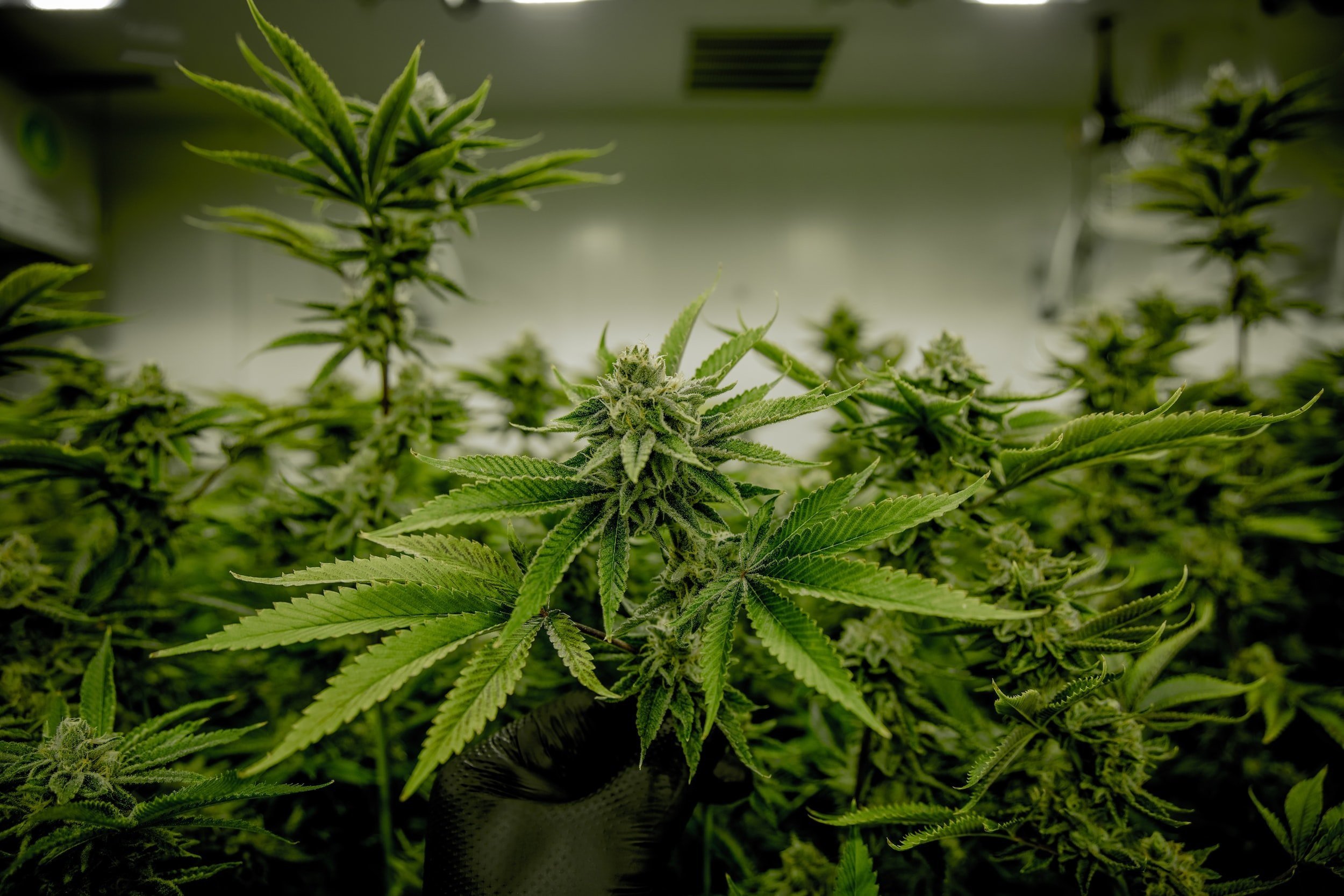
Spirits are high at the White House and many other houses as President Biden announces a federal pardon of those convicted of “simple use and possession” of marijuana. This signals the beginning of significant federal efforts to reform the Federal Government’s stance on marijuana and rolls up prior marijuana enforcement efforts that have gone up in smoke since the Obama administration.
On October 6, 2022, President Biden issued a statement on marijuana reform and announced three-steps he is taking change the Federal Government’s stance on marijuana and prior convictions for “use and possession”.
First, he is announcing a pardon of all prior FEDERAL offenses of simple possession of marijuana. This only relates to federal offenses and does not have any impact on state convictions for possession and use. This is likely an effort to put pressure on red state governors who may elect to not pardon state marijuana convictions prior to next year’s elections. We know this because of item two on Biden’s list.
Second, he is urging all Governors to do the same with state offenses.
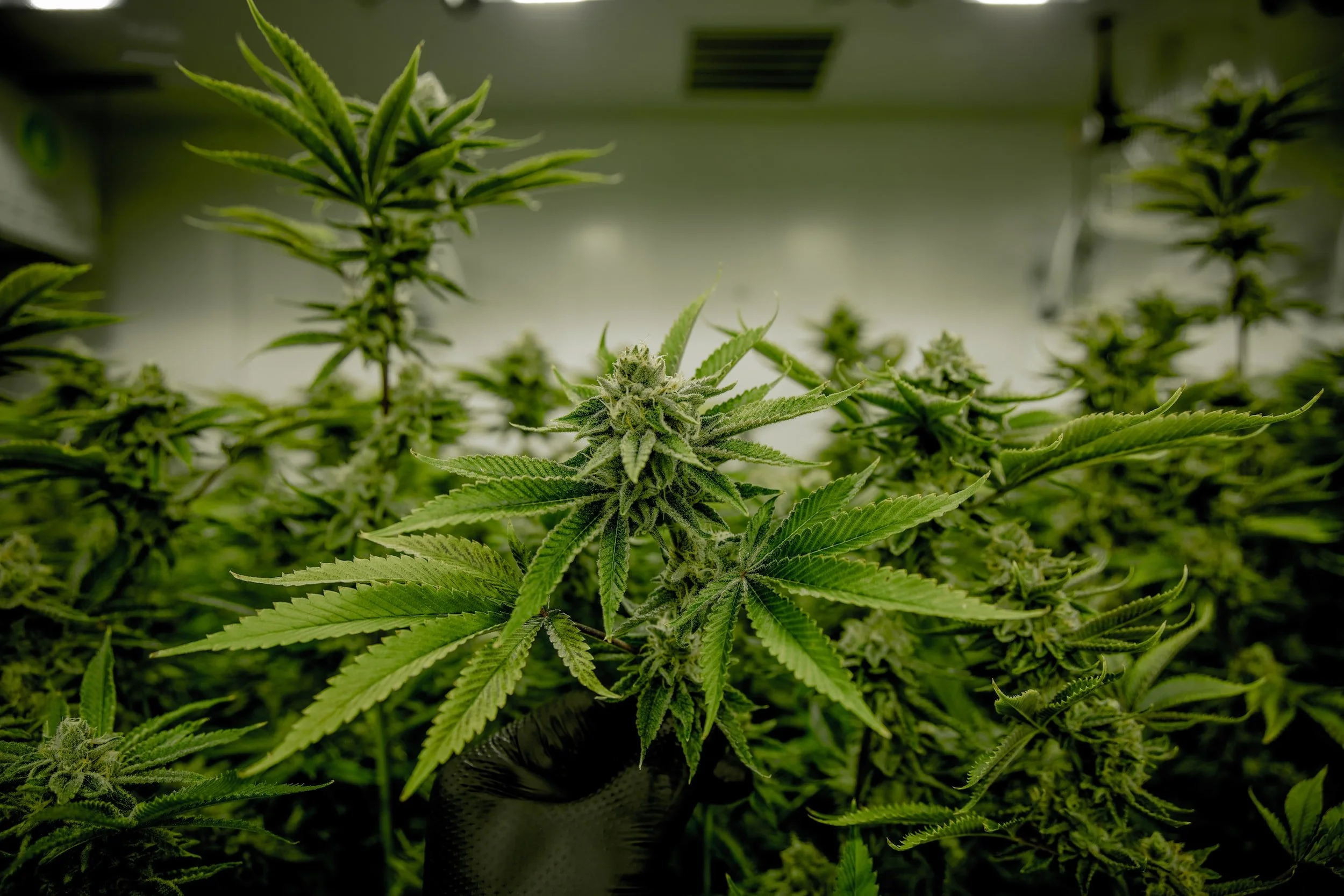 President Biden issued an announcement that he will pardon those convicted of “simple use and possession” of marijuana[/caption]
Third, he is asking the Secretary of Health and Human Services and the Attorney General to initiate the administrative process to review how marijuana is scheduled under federal law.
The President and the Governors of each state have the ability to pardon those convicted of criminal offenses. The President of the United States only has the ability to pardon those convicted of federal offenses. In this case, he will pardon those convicted of simple use and possession under the Controlled Substances Act – 21 U.S.C. 844.
A pardon is an expression of the President’s forgiveness because the person has been rehabilitated. A pardon is ordinarily granted after the defendant accepts responsibility for the offense and establishes that they have good conduct for a significant period of time after they have completed their sentence. This is a general rule, and there are exceptions. Many Presidents have pardoned people for purely political reasons such as the pardon of Roger Stone and Paul Manafort by President Trump.
A defendant must file an application for pardon which then goes to a committee established by the President to evaluate the request.
A pardon does not signify innocence but it does remove all civil disabilities related to the offense. It removes restrictions on the right to vote, hold state or local office or sit on a jury. A pardon would make it easier to obtain a license with a state agency such as a health professional license.
Federal prosecutors don’t often charge people with simple use and possession of marijuana. They leaf that up to the states (I can’t help myself). In 2016 the United States Sentencing Commission conducted a study of “simple possession” charges in the federal system. “Simple drug possession” is a misdemeanor under federal law that provides that an offender may be sentenced to a term of imprisonment of one year and be fined $1,000. For a second offense, the person can be convicted of a felony.
For the fiscal year 2013 the U.S. Sentencing Commission identified 2,169 offenders who were charged with simple possession of marijuana. This was a record high (I’m so sorry), and was up from 1,238 the previous year.
If this executive order pardons everyone convicted of “simple possession” it will likely benefit tens of thousands of citizens. However, the bigger benefit will be pardons at the state level which will certainly impact millions of people if implemented in all 50 states.
This announcement is not likely to open any jail cells though, the Federal Government has avoided prosecuting petty drug crimes since the Obama administration and “simple use and possession” is only a misdemeanor offense – it's not likely to result in significant jail time.
First, the Attorney General is likely going to have to issue guidance or weigh in on exactly what – “simple use or possession means”. He is likely referring to 21 U.S.C. 844 which is a misdemeanor offense. Frankly, there are not a lot of federal convictions for simple use or possession. Federal prosecutors generally don’t prosecute cases unless they involve a larger drug conspiracy. While this may sound like sweeping reform – those convicted of conspiracy or possession of a large amount may be left high and dry.
Typically a pardon takes a very long time. Most presidents don’t issue pardons until their last few days in office – with some exceptions. However, with this policy change we can expect that the pardons will move swiftly. Cases will be reviewed in short order and the president will likely have some sort of ceremony while he announces the sweeping pardon’s of those convicted of marijuana offenses.
The likely answer is no. Biden is interested in coordinating government efforts for an eventual de-scheduling of marijuana. This means that he wants everyone currently in custody for “simple use and possession” to receive a pardon so that when it is no longer a federal offense to use or possess marijuana there isn’t a disparity between those previously convicted and those who have received a benefit of the government ignoring federal law for the last 12 years. Biden has been notoriously hard on other drugs such as prescription drugs, heroin, and cocaine.
We are reading the tea leaves here but if you live in a state where marijuana is currently legal for recreational use the answer is a very likely YES. If you are in a state where it is still a crime to use and possess marijuana the answer may be a “not right now”. Many states that have still criminalized marijuana are likely to require legislative approval for such a sweeping pardon because of the potential political backlash that a swift response to Biden would cause. However, after convictions for marijuana possession continue to be pardoned by state governors across the country the other states will likely come around in order to avoid the political fallout that would be cause by refusing to overturn convictions of those impacted by misguided marijuana laws. The reality is that many of those hampered by convictions are minorities and the impact of their convictions prevent access to gainful employment and significant financial and social impacts.
Ronald Chapman II is the founder of Chapman, Dowling & Mallek and a top-rated Michigan federal criminal defense attorney who represents clients in federal courts nationwide. His practice is focused on defending individuals and organizations in complex federal prosecutions, including white-collar criminal matters and healthcare fraud investigations.
Throughout his career, Mr. Chapman has helped clients avoid more than $550 million in potential penalties, primarily in cases involving physicians, healthcare providers, executives, and professionals facing federal charges. He is widely recognized for his work as a Michigan healthcare fraud defense attorney, as well as for his results in white collar criminal defense in Michigan, where cases often involve parallel civil, regulatory, and criminal exposure.
Apr-8-2026
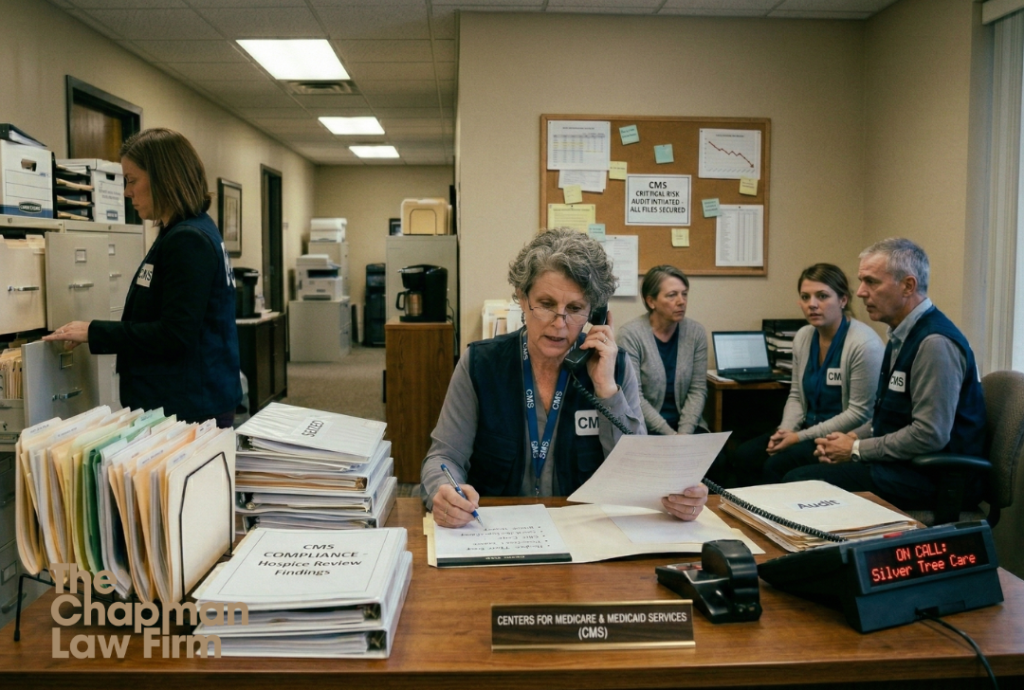
Hospice fraud is a serious enforcement priority for Medicare, and federal regulators are under pressure...
Apr-2-2026
In federal court, some of the most important battles happen after trial—on appeal—where the focus...
Jan-9-2026
Memphis, Tennessee – The verdict returned this week in United States v. Sanjeev Kumar closed...
Dec-31-2025
Dr. Lonnie Joseph Parker, a Texarkana physician, was recently convicted in federal court of unlawfully...
Serving Clients Nationwide.
Chapman, Dowling & Mallek is headquartered in Detroit, Michigan and represents clients in federal investigations and criminal matters across the United States. Our attorneys handle complex federal cases nationwide while maintaining offices in Michigan and other states.
456 E. Milwaukee, Detroit, MI 48202
2 Comments
Thanks Esquire.
I wonder, if in fact Marijuana is reclassified as other than Schedule 1, could it impact recourse for those of us coerced into a plea 'deal' of YEARS incarceration, based on DEA calculations of nebulous at best, ' Marijuana Equivalents ' ... ?
Lawrence Simons MD
Of great significance is the plain language of the Controlled Substances Act itself. Responsibility to maintain accurate Schedules I-IV that faithfully reflect the legitimate medical use of drugs rests in the Commander of the US Public Health Service, who is the Surgeon General. A Schedule I Drug is a dangerous drug with no known medical use, by definition. In 1974, recalling FDA-approved drugs for childhood colic that had in fact been used for a medical purpose, the Surgeon General attempted to de-schedule cannabis completely. Richard Nixon wrote an Executive Order commanding the Surgeon General to halt the effort. 8 Presidents did nothing to resume the Surgeon General's statutory duty to review and maintain the DEA Schedules in conformance with medical standards of care. Now that our Supreme Court, voting 9-0 in Ruan v US, rejected any federal role in setting the Standard of Care, the Nixon fatwah against letting medical standards of care determine the DEA schedules is as unconstitutional as Khomeini's fatwah against Salman Rushdie. This may be the first time in two years that the Biden Administration openly followed the Constitution on any issue, did not object to a Supreme Court ruling but took steps to follow what the Court ruled constitutional, and they are to be commended for it. There is significant evidence of medical benefit from cannabis and certain cannabinoids, in states where cannabis is legal, and federal standards need to reflect that legitimate medical use of the kind explicitly recognized in Ruan, does in fact happen with cannabis and cannabinoids. Therefore cannabis can not logically remain on Schedule I, and the Nixon order suspending the Surgeon General from performing his statutory duties of reviewing and editing the DEA Schedules must terminate. There may be sound reasons for certain cannabinoid products to be controlled. Recently-observed increases in THC-induced psychosis, among residents and visitors to cannabis-legal states who purchase purified THC that was chemically isolated from cannabis and concentrated to 90% or more, may reasonably demand that such chemically modified cannabis products be only available by prescription. However, the Nixon order of 1974 made it impractical for physicians to prescribe state-legal cannabis because DEA abused its powers by cancelling the Prescriber Number of any physician who prescribed state-legal cannabis products to patients, as states began legalizing cannabis cultivation. Since this is plainly DEA interference in the medical standard of care in those states that re-legalized cannabis, it cannot be allowable post-Ruan. So the irony is that Nixon's suspension order of 1974, freezing the DEA Schedules into a time capsule of the prevailing medical beliefs of 50 years ago, has blocked doctors and pharmacists from helping states to regulate cannabis products responsibly.
Psychiatric patients have been hospitalized with acute psychosis from over-the-counter 90% pure THC. Many were so convinced that "marijuana is safe" that it took several days of detox for them to realize that chemically modifying cannabis had made it unsafe and consuming too much of the chemically modified cannabis product had made them quite sick.
We need to remove the junk science, propaganda and hype from this entire subject and let doctors be doctors. Failing that, misinformation and disinformation will drive public policy. The Nixon order that barred the Surgeon General from doing his duties, should never have been allowed. Vacating it is absolutely necessary.