Trump’s First Amendment Defense?
Insights from White Collar Criminal Defense Attorneys Trusted Nationwide
Federal criminal defendants seeking precedent can make unlikely bedfellows.
Charlotte Anita Whitney, a member of the Communist Labor Party, was convicted under the California Criminal Syndicalism Act for allegedly helping to establish an organization that advocated the violent overthrow of the government. Whitney argued that her conviction violated her First Amendment rights.
The Supreme Court upheld Whitney’s conviction. The majority opinion, written by Justice Sanford, held that states could prohibit advocacy of violence for political change as a means of preserving public order. The decision emphasized the “clear and present danger” test, though this specific doctrine was more clearly articulated in earlier cases like Schenck v. United States.
Notably, Justice Brandeis’ concurring opinion, joined by Justice Holmes, has become more influential in later years. Brandeis argued for more protection of free speech, suggesting that only speech that incites imminent lawless action should be restricted. His view eventually gained traction in later First Amendment jurisprudence.
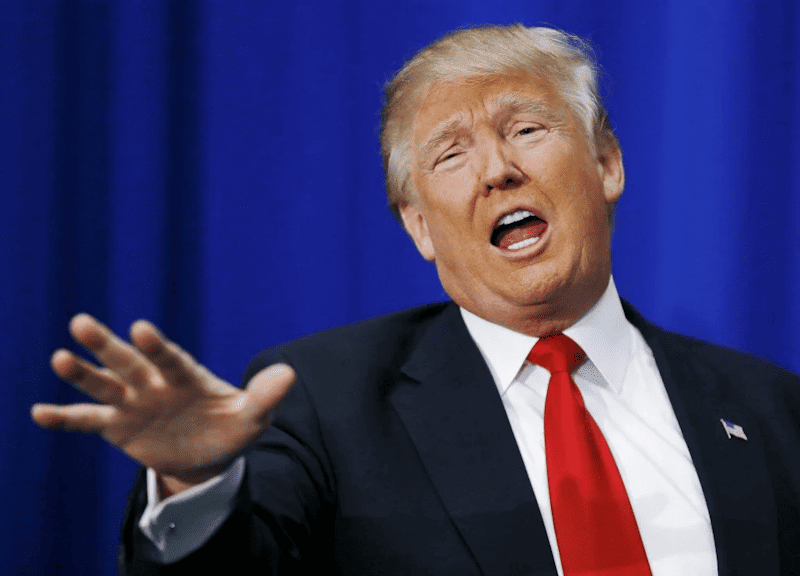
In the wake of former President Donald Trump’s indictment for alleged actions to subvert the 2020 election results, a heated legal debate has emerged regarding the applicability of the First Amendment as a defense. At the heart of this debate is the question: Does Trump’s conduct, as alleged, fall under the protective umbrella of free speech?
The Department of Justice’s indictment against Trump encompasses charges of conspiracy to defraud the United States and obstruct official proceedings. The crux of the indictment is that Trump used baseless claims of election fraud to pressure state officials and Vice President Mike Pence to alter the election outcome. Legal experts argue that the First Amendment does not extend to speech used in furtherance of a crime, such as a conspiracy or fraud.
Trump and his legal team have countered these allegations with a First Amendment defense. They argue that Trump’s advocacy, including his claims of election fraud, constitutes political speech – one of the most protected forms under the First Amendment. This defense hinges on the idea that even if Trump’s claims were false, he had the right to make them as part of political discourse.
Legal precedents suggest a complex relationship between free speech and actions taken based on that speech. The Supreme Court has historically differentiated between mere advocacy and direct incitement of illegal actions. In this context, Trump’s defense might argue that his speech did not directly incite unlawful actions but rather was part of a broader political expression.
Crucially, the determination of whether Trump’s speech is protected might come down to intent and the specific context of his actions. If it can be shown that Trump genuinely believed in the validity of his claims, his defense could argue that his actions were not a deliberate attempt to subvert the election but rather an exercise of his right to political expression.
While the allegations against Trump are serious and the legal challenges formidable, his First Amendment defense presents a compelling argument rooted in the fundamental principles of free speech. The outcome of this legal battle will likely hinge on nuanced interpretations of law and precedent, underlining the delicate balance between safeguarding democratic processes and protecting constitutional rights.
The ACLU famously defended Trump’s First Amendment right but stopped short of defending his January 6th actions. They claim: “Trump’s speech is no more constitutionally protected than a bank robber saying hand me your money”.
And this is exactly where the line is drawn- is this speech incident to a criminal act or speech incident to a political act.
For educated jurists that leave their politics at the door- this is a close call. A bank robbery is a bank robbery, but contesting an election and “election interference” hinges on your belief in the validity of the election process- a process called into serious question by opponents when Trump won (Cambridge analytica).
This is the stage we have set before us. Will the victor get to measure the truth behind political speech?
Our courts even in the most turbulent times have passed this test (United States v Eichman), (Near v. Minnesota). Even if it takes upholding flag burning they will protect the 1st Amendment.
The focus then will be on conduct and not speech. If Smith is smart, and he most certainly is, this case will move away from Trump’s rhetoric and focus on his conduct.
The conduct at the center of this is the “fake electors” scheme. This will be the subject of a later post exploring the legality/illegality of this “scheme”. But this too is a close call.
But we are in for an interesting and spirited trial and appellate process where issues central to our democracy are at stake.
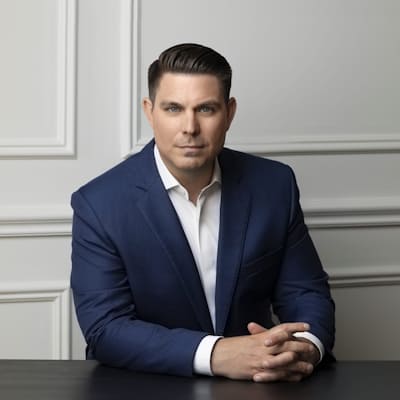
Ronald Chapman II is the founder of Chapman, Dowling & Mallek and a top-rated Michigan federal criminal defense attorney who represents clients in federal courts nationwide. His practice is focused on defending individuals and organizations in complex federal prosecutions, including white-collar criminal matters and healthcare fraud investigations.
Throughout his career, Mr. Chapman has helped clients avoid more than $550 million in potential penalties, primarily in cases involving physicians, healthcare providers, executives, and professionals facing federal charges. He is widely recognized for his work as a Michigan healthcare fraud defense attorney, as well as for his results in white collar criminal defense in Michigan, where cases often involve parallel civil, regulatory, and criminal exposure.
Apr-8-2026
Hospice fraud is a serious enforcement priority for Medicare, and federal regulators are under pressure...
Apr-2-2026
In federal court, some of the most important battles happen after trial—on appeal—where the focus...
Jan-9-2026
Memphis, Tennessee – The verdict returned this week in United States v. Sanjeev Kumar closed...
Dec-31-2025
Dr. Lonnie Joseph Parker, a Texarkana physician, was recently convicted in federal court of unlawfully...
Serving Clients Nationwide.
Chapman, Dowling & Mallek is headquartered in Detroit, Michigan and represents clients in federal investigations and criminal matters across the United States. Our attorneys handle complex federal cases nationwide while maintaining offices in Michigan and other states.
456 E. Milwaukee, Detroit, MI 48202