Sean “Puffy” Combs Trial Jury Selection
Insights from White Collar Criminal Defense Attorneys Trusted Nationwide
Talking Points: Keys to the Diddy Trial
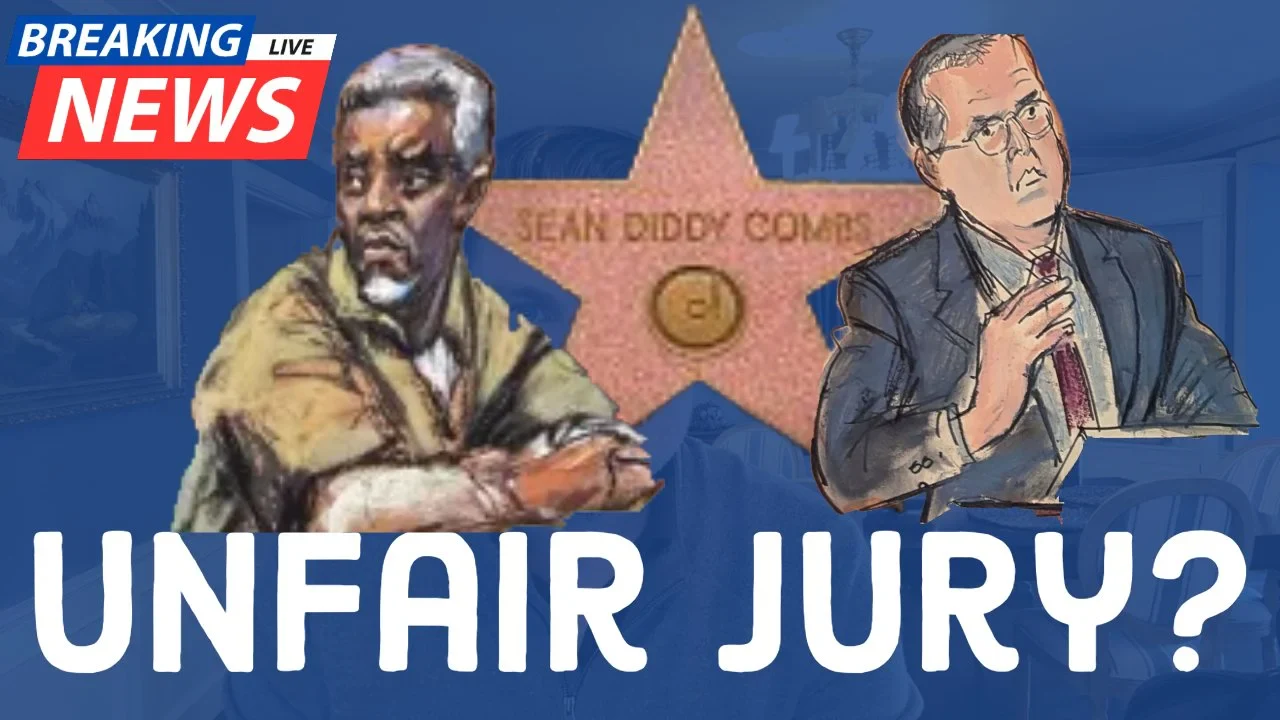
The Diddy case appears to be overcharged, stale, and lacking any resemblance to Weinstein, Epstein and other the Abercrombie case. It's time to see if the case was that of an overzealous prosecutor or if it has substance. My prediction, this may go better for Diddy than many anticipate, potentially even resulting in an acquittal.
Arun Subramanian, appointed by President Biden, has slightly over two years of judicial experience and no prior judicial roles. This trial will be his first major federal criminal case. His background primarily involves complex civil litigation, employment, and contract disputes, with limited exposure to federal anti-sex trafficking laws. He has never litigated a criminal case, having participated in only four trials, leading just three. Expect him to proceed cautiously, favoring the prosecution, with a moderately liberal bias. Nicknamed “Ginsburg 2.0,” Subramanian may be influenced by the prosecution’s all-female team and the sex trafficking charges.
Challenges Selecting an impartial jury will be exceptionally challenging. Jurors will be individually questioned, but as demonstrated in the Maxwell trial, jurors might withhold significant personal information. Given extensive media coverage labeling Diddy as a sex trafficker, the defense should strategically use this attention against the prosecution. If jurors perceive the incidents as typical celebrity excess rather than criminal behavior, media pressure might undermine the government’s case. Conversely, potential jurors who are sexual assault survivors might resent classifying attendance at sex parties as assault.
Although framed as a racketeering case involving numerous separate incidents anchored by the 2016 video of Casie Ventura’s assault, the prosecution must prove sex trafficking was an intentional aim of the alleged organization. Many experienced defense attorneys view this as an overcharged case designed to circumvent the statute of limitations—a common prosecutorial tactic. Unless the government presents dramatically compelling evidence, the defense argument highlighting prosecutorial overreach is likely to prevail.
Judge Arun Subramanian, presiding over Sean “Diddy” Combs’s federal sex trafficking and racketeering trial in the Southern District of New York, employs a structured and meticulous approach to jury selection, tailored to the complexities of high-profile criminal cases.
According to Judge Subramanian’s official practices, jurors are selected using the struck panel method. In a typical single-defendant criminal case, this involves:
Voir dire of 32 prospective jurors, accounting for 12 jurors, 2 alternates, and the peremptory challenges allotted to both the defense and prosecution.
Court-led questioning of the panelists, with follow-up inquiries conducted individually in private settings if sensitive issues arise.
Unlimited challenges for cause permitted for both parties, with peremptory challenges exercised simultaneously through written submissions.
Final selection of jurors based on the lowest unchallenged numbers from the remaining panelists.
These procedures are designed to ensure a fair and impartial jury, particularly crucial in cases with significant media attention and public interest.
In the trial of Sean Combs, these procedures have been adapted to address the case’s high-profile nature. Approximately 600 potential jurors completed detailed questionnaires assessing their knowledge of the case and potential biases. Judge Subramanian is conducting individual voir dire sessions, focusing on jurors’ exposure to media coverage and personal experiences related to the case’s subject matter. An anonymous jury has been empaneled to protect jurors from potential external influences or harassment. Both legal teams have unlimited challenges for cause, with peremptory challenges to be exercised after the voir dire process concludes.
The federal jury selection process is central to upholding a defendant’s Sixth Amendment right to an impartial jury. This article provides a comprehensive overview of the procedural and constitutional rules that govern jury selection, including notable case law such as Batson v. Kentucky, and evaluates the implications of courtroom publicity and media presence. It also offers practical advice for conducting voir dire effectively as a defense strategy.
Jury selection in federal criminal trials is governed by both the Constitution and statutory law. The Sixth Amendment guarantees the right to a jury drawn from a fair cross-section of the community, while the Equal Protection Clause of the Fourteenth Amendment forbids discriminatory exclusion from jury service. These guarantees are codified and operationalized under the Jury Selection and Service Act of 1968 (28 U.S.C. §§ 1861–1869), which sets out the procedures for compiling jury pools and provides the basis for challenging improper exclusions .
Defendants may raise challenges based on:
Systematic exclusion of a “distinctive” group (e.g., race or gender) (Duren v. Missouri, 439 U.S. 357 (1979));
Failure to draw from a representative cross-section of the community;
Violations of the Equal Protection Clause (Castaneda v. Partida, 430 U.S. 482 (1977)).
III. The Batson Doctrine and Peremptory Challenges
A cornerstone of jury selection jurisprudence is Batson v. Kentucky, 476 U.S. 79 (1986), which prohibits the use of peremptory strikes to exclude jurors on the basis of race. Batson established a three-step burden-shifting framework to evaluate claims of discriminatory juror exclusion:
The opponent of the strike must make a prima facie case;
The proponent must offer a race-neutral explanation;
The court decides whether intentional discrimination occurred.
This framework was extended in Powers v. Ohio (499 U.S. 400 (1991)) and Georgia v. McCollum (505 U.S. 42 (1992)) to apply to defense peremptory strikes, and in J.E.B. v. Alabama ex rel. T.B. (511 U.S. 127 (1994)) to prohibit gender-based exclusions.
Voir dire serves several essential defense functions:
Identifying grounds to challenge jurors for cause;
Preserving appellate issues;
Informing peremptory strikes;
Introducing key defense themes; Preemptively addressing prejudicial facts; Establishing rapport with the jury . Strategically, defense counsel should:
Prepare tailored voir dire questions in advance;
Be proactive in challenging for cause, especially early in the process; Focus on revealing bias indirectly when direct questioning may be restricted; Preserve the record in jurisdictions where voir dire is judge-conducted .
Ronald Chapman II is the founder of Chapman, Dowling & Mallek and a top-rated Michigan federal criminal defense attorney who represents clients in federal courts nationwide. His practice is focused on defending individuals and organizations in complex federal prosecutions, including white-collar criminal matters and healthcare fraud investigations.
Throughout his career, Mr. Chapman has helped clients avoid more than $550 million in potential penalties, primarily in cases involving physicians, healthcare providers, executives, and professionals facing federal charges. He is widely recognized for his work as a Michigan healthcare fraud defense attorney, as well as for his results in white collar criminal defense in Michigan, where cases often involve parallel civil, regulatory, and criminal exposure.
Apr-8-2026
Hospice fraud is a serious enforcement priority for Medicare, and federal regulators are under pressure...
Apr-2-2026
In federal court, some of the most important battles happen after trial—on appeal—where the focus...
Jan-9-2026
Memphis, Tennessee – The verdict returned this week in United States v. Sanjeev Kumar closed...
Dec-31-2025
Dr. Lonnie Joseph Parker, a Texarkana physician, was recently convicted in federal court of unlawfully...
Serving Clients Nationwide.
Chapman, Dowling & Mallek is headquartered in Detroit, Michigan and represents clients in federal investigations and criminal matters across the United States. Our attorneys handle complex federal cases nationwide while maintaining offices in Michigan and other states.
456 E. Milwaukee, Detroit, MI 48202