United States v. Banks: This 3rd Cir. loss amount case has SCOTUS POTENTIAL
Insights from White Collar Criminal Defense Attorneys Trusted Nationwide

2b1.1 and its application note state that “loss” is the greater of “actual or intended loss” with “intended loss” being “pecuniary harm that the defendant purposely sought to inflict”. This is true even if the loss would have been impossible or unlikely to occur.
Lets say for example that Dr. Bob wants to defraud a federal healthcare program by billing for services that he did not render. He sees a patient and then selects a range of codes that represent work that he did not do. The insurance company conducts a pre-payment audit and determines that Bob’s coding was fraudulent and does not pay the claim. If Dr. Bob billed for $2m worth of procedures he did not intend to do he would be on the hook for $2m worth of losses and his sentencing guidelines would reflect that loss amount.
This was true, at least until the 3rd Circuit decided to dissect the issue.
Banks was convicted of wire fraud and other crimes due to a relatively bone headed scheme to defraud Gain Capital Group by setting up fake accounts and funding them with other accounts that did not have sufficient funds. The scheme obviously did not work because Gain refused to credit his capitol account when it realized that the transferring accounts lacked sufficient funds.
Now, a casual observer would say that there was no loss to any party because Banks was not successful. But federal sentencing guidelines do not work that way especially in our system of overcriminalization. Our loss guidelines seek to punish not just the actual harm but the prospective harm. And so the Federal District Court, dutifully following the United States Sentencing Guidelines and application notes pretended that Banks’ conduct actually caused harm and sentenced him to 104 months in prison for his unsuccessful scheme that didn’t net him a single red cent.
On appeal, and likely recognizing the trend of jurisprudence rejecting deference to federal agencies, Banks’ counsel argued that the Supreme Court’s case in Kisor v. Wilkie, 139 S. Ct. 2400 (2019) applied to the Sentencing Commission’s Commentary. The issue is that the commentary – which is not a rule but rather an agency interpretation sweeps much broader than the guideline itself. It is the commentary that uses the term intended loss which is much more broad than the actual guideline.
This argument was genius and important for a few reasons. First, in a post-Booker world, it takes another shot at the concept that federal defendants – for years – have been subjected to exceedingly high sentences based on commentary and not rules. The statutory maximum for many offenses is 10 and 20 years and the words of mere people and not the black letter of the law has caused defendants to score higher in this range. The Supreme Court’s signal that agency deference will soon be a thing of the past is powerful ammunition to break this trend.
The 3rd Circuit ultimately agreed with Banks determining that “loss” for the purpose of federal sentencing guidelines relates to the “actual loss” and not the “intended loss”. Other Circuits may try to distinguish Banks and cabin it to just the 3rd Circuit. This will create a circuit split which is ripe for SCOTUS review.
Banks’ argument is genius for another very important reason. While SCOTUS has denied Cert in several Auer/Chevron deference cases, this case is a powerful vehicle that has the legs to get to the Supreme Court. Several Justices on the Court will be persuaded by the notion that the U.S. Sentencing Comissions’s interpretation should receive no deference because it promotes expansive agency interpretation over black letter law and violates long held doctrine of Separation of Powers.
This case is an appropriate vehicle for the Supreme Court to once again erode agency deference to its own rules and to tailor back the impact of committee notes and application notes causing judges to rely on the actual rules implemented by the U.S. Sentencing Commission as opposed to its un-promulgated guidance.
We already know that the Court does not look to kindly on convenient loss amount arguments as seen during this term in Ciminelli v. United States. In Ciminelli, the Government argued that the “right-to-control” theory of property interest creates an actionable fraud theory even where the victim was not deprived of any actual property but just the right to control their property. At oral argument this term, the Justices had some harsh words for the Government as it tried to defend a theory of fraud where the victim was not actually deprived of tangible property.
The Court’s treatment of the Ciminelli case will give us a glimpse of how it will treat banks on Certiorari.
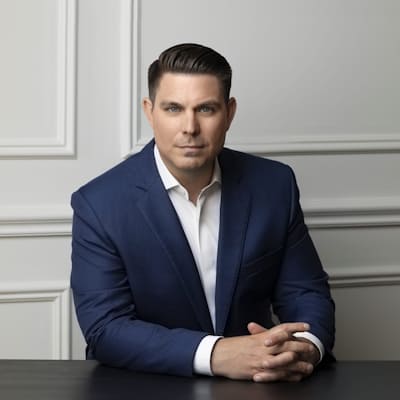
Ronald Chapman II is the founder of Chapman, Dowling & Mallek and a top-rated Michigan federal criminal defense attorney who represents clients in federal courts nationwide. His practice is focused on defending individuals and organizations in complex federal prosecutions, including white-collar criminal matters and healthcare fraud investigations.
Throughout his career, Mr. Chapman has helped clients avoid more than $550 million in potential penalties, primarily in cases involving physicians, healthcare providers, executives, and professionals facing federal charges. He is widely recognized for his work as a Michigan healthcare fraud defense attorney, as well as for his results in white collar criminal defense in Michigan, where cases often involve parallel civil, regulatory, and criminal exposure.

Apr-8-2026
Hospice fraud is a serious enforcement priority for Medicare, and federal regulators are under pressure...
Apr-2-2026
In federal court, some of the most important battles happen after trial—on appeal—where the focus...

Jan-9-2026
Memphis, Tennessee – The verdict returned this week in United States v. Sanjeev Kumar closed...
Dec-31-2025
Dr. Lonnie Joseph Parker, a Texarkana physician, was recently convicted in federal court of unlawfully...
Serving Clients Nationwide.
Chapman, Dowling & Mallek is headquartered in Detroit, Michigan and represents clients in federal investigations and criminal matters across the United States. Our attorneys handle complex federal cases nationwide while maintaining offices in Michigan and other states.
456 E. Milwaukee, Detroit, MI 48202