
11th Circuit Gives Ruan a Hallow Victory
Insights from White Collar Criminal Defense Attorneys Trusted Nationwide
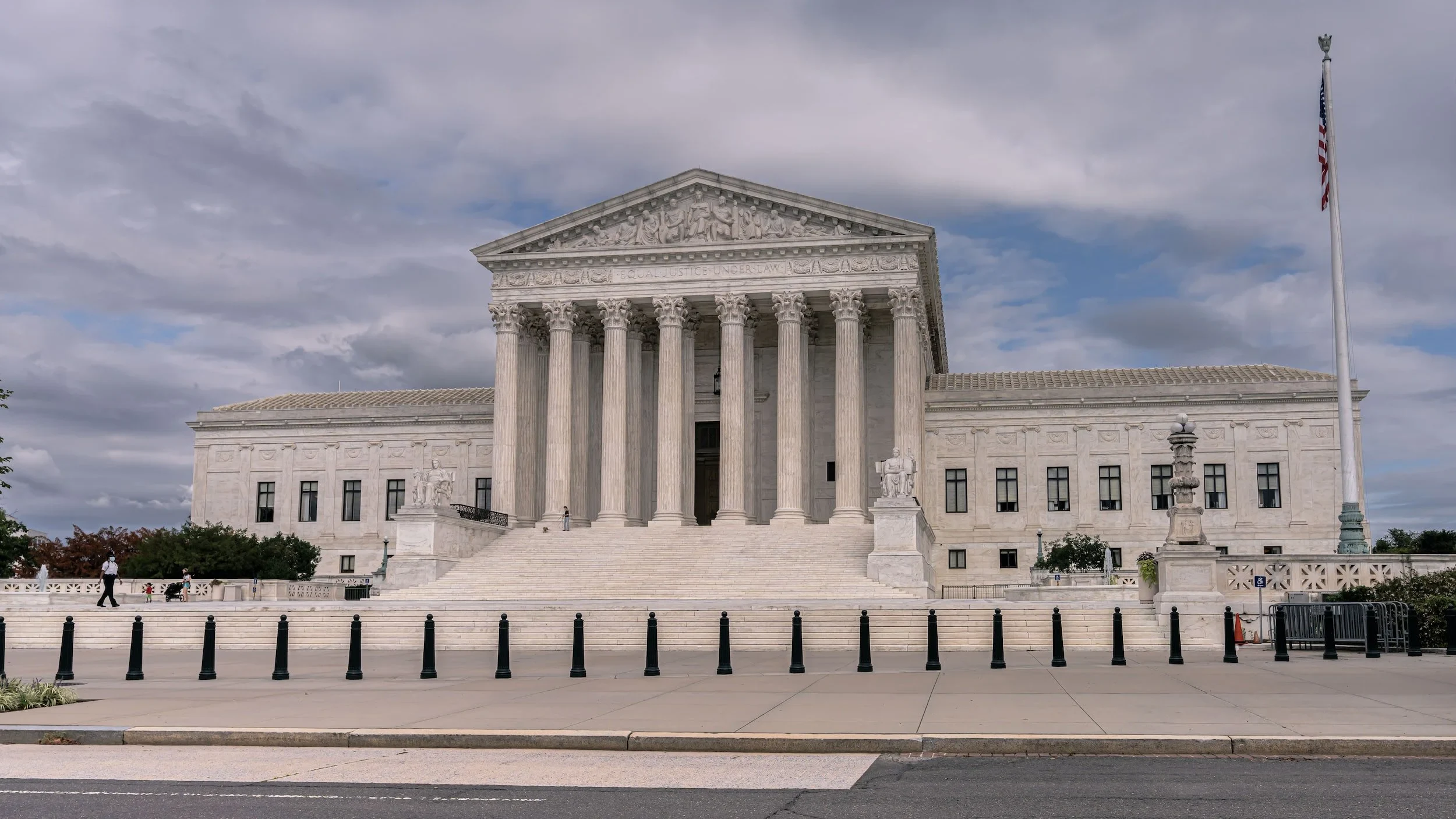
11th Circuit Opinion Located Here: United States v. Ruan (11th Cir 2023)
For a brief refresher on the Ruan decision read this.
It has been over seven months since the Supreme Court sided for Dr’s Ruan and Couch in the first high court decision to address controlled substance prescribing prosecutions against physicians since 1975. Ruan and Couch have remained in federal custody after the Supreme Court remanded the case back to the 11th Circuit. To the uninitiated court watcher – this may have seemed like a strange move. Stopping short of granting a new trial, the Supreme Court elected to allow the Circuits the ability to wrestle with how to handle Ruan and Couch and the other cases filtering up to the Circuit Courts. To experienced court watchers, the move was unsurprising given the Supreme Court’s reluctance to create wide shifts in the law. Remand permitted the Circuits to interpret the Ruan decision and further challenges can be launched if the Circuits once again get it wrong.
After seven months of baited breath – we finally got a decision out of the 11th Circuit and it was a mixed bag for Ruan and Couch. In a Per Curiam opinion, the 11th Circuit vacated in part and affirmed in part the defendant’s convictions. Recall, the District Court in Ruan gave the following instruction regarding “good faith”:
“A controlled substance is prescribed by a physician in the usual course of a professional practice and, therefore, lawfully, if the substance is prescribed by him in good faith as part of his medical treatment of a patient in accordance with the standard of medical practice generally recognized and accepted in the United States”
The 11th Circuit was asked on remand whether this instruction was sufficient to account for the Supreme Court opinion that requires the government to prove that the physician knew he or she prescribed in an unauthorized manner.
On remand, the 11th Circuit determined that this instruction was not sufficient because it did not contain any qualification to make it clear that the physician must be judged on the subjective component. The Court next turned to the issue of whether the insufficient instruction was harmless. They found that it was not citing McDonnell v. United States, a Supreme Court case which held that omission of limiting language in the definition of “official act” was not harmless.
The Court next analyzed the other counts of conviction. The first was the conspiracy count under 21 U.S.C. 846. Strangely, the Court did not vacate the conspiracy conviction because the instructions provided for the conspiracy count contained a subjective component. This is strange because it ignores how traditional juries operate. If the jury thought the conduct was sufficient to find that Ruan and Couch unlawfully prescribed and conspiracy simply requires an agreement of two or more persons to unlawfully prescribe – the invalid instruction on the 841(a) counts would have led them to the same invalid conclusion.
Finally, the court also affirmed convictions for health care fraud, violating the Anti-Kickback Statute, money laundering and RICO violations. This is unsurprising given that the faulty 841(a) instruction had no impact on these convictions.
We now know that the 11th Circuit has rejected the “good faith as part of his medical treatment” instruction because it does not fully appraise the jury of the important subjective intent needed to convict. But just as the Supreme Court did, the 11th Circuit stopped short of completely answering the question. Despite a trip to the Supreme Court and a lengthy opinion on remand we still lack clarity on the appropriate instruction to provide a jury when a physician is facing a prosecution for unlawfully prescribing controlled substances.
Since Ruan, courts have been struggling with the application of the Court’s decision. Recent instructions have been a mixed bag – some more defense friendly than their predecessor instructions and strangely some less defense friendly. The 11th Circuit opinion did nothing to clear up this murky water and may have potentially added opacity.
Other circuits will weigh in on this issue. The 4th Circuit just issued a briefing schedule for Naum v. United States and other circuits will also issue opinions soon on their Ruan cases. Further updates to come.
Ronald Chapman II is the founder of Chapman, Dowling & Mallek and a top-rated Michigan federal criminal defense attorney who represents clients in federal courts nationwide. His practice is focused on defending individuals and organizations in complex federal prosecutions, including white-collar criminal matters and healthcare fraud investigations.
Throughout his career, Mr. Chapman has helped clients avoid more than $550 million in potential penalties, primarily in cases involving physicians, healthcare providers, executives, and professionals facing federal charges. He is widely recognized for his work as a Michigan healthcare fraud defense attorney, as well as for his results in white collar criminal defense in Michigan, where cases often involve parallel civil, regulatory, and criminal exposure.


Apr-8-2026
Hospice fraud is a serious enforcement priority for Medicare, and federal regulators are under pressure...
Apr-2-2026
In federal court, some of the most important battles happen after trial—on appeal—where the focus...

Jan-9-2026
Memphis, Tennessee – The verdict returned this week in United States v. Sanjeev Kumar closed...

Dec-31-2025
Dr. Lonnie Joseph Parker, a Texarkana physician, was recently convicted in federal court of unlawfully...
Serving Clients Nationwide.
Chapman, Dowling & Mallek is headquartered in Detroit, Michigan and represents clients in federal investigations and criminal matters across the United States. Our attorneys handle complex federal cases nationwide while maintaining offices in Michigan and other states.
456 E. Milwaukee, Detroit, MI 48202
2 Comments
Ruan Invalidates Moore
BY XIULU RUAN, MD APRIL 3, 2023
FROM HIS PRISON DR. XIULI RUAN, writes this statement for thew Daily Remedy Editor Jay K. Joshi MD, a victim of "DOJ-DEA Abuse and Targeting:"
Dr. Ruan argues the Supreme Court ruling in Ruan invalidates prior interpretations of the CSA.
Content has been preserved in its original form and syntax. Modifications were made only to protect the interest of private citizens and to facilitate readability.
The Supreme Court’s Seminal Case law, U.S. v. Moore, 423 U.S. 122 (1975) Is Fatally Flawed on Multiple Grounds
Combining the CSA 841 Statute with 21 C.F.R. Section 1306.04(a) and Moore (1975) to Fan the Criminal Standard to Prosecute Clinicians as Drug Traffickers Violated Clinicians’ Due Process Rights. The prosecution of physicians for overprescribing controlled substances started about a century ago following the enactment of the Harrison Narcotics Act (HNA) of 1914. Such prosecutions had invariably involved allegedly overprescribing opioids for drug addicts, or patients with Opioid Use Disorders in today’s terms, a specialty akin to addiction medicine.
In 1970 the Controlled Substances Act (CSA) replaced HNA’s single penalty with a series of provisions specifically designed to treat registered and unregistered individuals differently. Section 841 is aimed at nonregistered drug pushers and traffickers and thus provides the most severe penalties; Section 842 is a regulatory provision primarily aimed at “technical violations,” contemplating a civil, rather than criminal penalty; and Section 843 defines more serious criminal offenses for registrants.
In 1975 the Supreme Court (the Court) handed down U.S. v. Moore, 423 U.S. 122. Prosecution of clinicians under CSA 841 has increased exponentially since Moore (1975). Remarkably, prosecuted clinicians in the post-Moore era involved all clinical disciplines, unlike that of pre-Moore, where only those who practiced addiction medicine had been prosecuted.
The Most Fatal Error of Moore (1975) – Lacking Mens Rea
Moore’s ruling, “registered physicians can be prosecuted under Section 841 when, as here, their activities fell outside the usual course of professional practice” (“OUCPP”) lacked “mens rea.” This crucial error was most likely inadvertent because it was at odds with a host of the Court’s precedents, both before and after Moore (1975).
In U.S. v. Morrissette, 342 U.S. 246 (1952), the defendant carried away and sold three tons of used bomb casings (for $84), which had been dumped in uninhabited land. The district court refused to submit or allow the defendants counsel to argue whether the defendant acted without wrongful or criminal intent. In reversing, the Court held that criminal intent to steal or knowingly convert government property cannot be presumed merely because the defendant took it.
In Coalutti v. Franklin, 439 U.S.379 (1979), a case about certain provisions of the Pennsylvania Abortion Act, the Court warned against the danger of imposing strict liability without requiring mens rea: It is not unlikely that experts will disagree. The prospect of such disagreement in conjunction with a statute imposing strict civil and criminal liability, could have a profound chilling effect on the…in the manner indicated by the best medical judgment (ld.,at 3996)
In Elonis v. U.S., 575 U.S. 723 (2015), a case involving transmitting threats on social media, the Court reversed the conviction, holding that the fact a statute does not specify any required mental state does not mean that none exists. It further explained that this rule of construction reflects the basic principle that wrongdoing must be conscious to be criminal.
In Rehaif v. U.S.• 139 S. Ct. 2191(2019), the Court once again emphasized that it applies the presumption in favor of scienter (mens rea) even when Congress does not specify any scienter in the statutory context. It further held that whether a criminal statute requires the Government to prove that the defendant acted knowingly is a question for Congress.
Based on the above precedents, the error of missing mens rea in Moore Court’s OUCPP Ruling is plain. Moore (1975) cannot co-exist with Ruan; therefore, Moore (1975) must be invalidated.
The Court in Moore (1975) Committed the Fallacy of Hasty Generalization in Deriving the OUCPP Rule
In his book, Logic for Lawyers: A Guide to Clear Legal Thinking” (National Institute for Trial Advocacy, Third Edition, 1997), Reggero J. Aldisert, former Chief Justice of the Third Circuit, explained that the fallacy of hasty generalization results from enumerating instances without obtaining a representative number to establish an inductive generalization. It appears when one or two decisions are used to make a quantum leap to a conclusion that these decisions form a rule of generalization.(Id.p. 276)
The Moore Court drew a faulty generalization of the OUCPP Rule from exceptional circumstances. {For example, Dr. Moore’s practice was unparalleled.) In fact the Senate Report on Narcotic Addict Treatment Act of 1974 used Dr. Moore’s case as the most egregious example of an unscrupulous physician operating in illicit drug trafficking (U.S. v. Moore, 505 F.2d 426 (D.C. Cir. (1974), at 475) (dissent). Thus the derivation of OUCPP Rule did not come from consideration of common experiences; instead, it came from an extremely narrow set of facts. (Dr. Moore prescribed as many methadone tablets as patients asked, and patients would pay sliding scale fees according to the number of methadone tablets prescribed.) Thus the OUCPP Rule has extremely limited general applicability to other cases because of its basis on a narrow set of facts that were not shared by others.
The Moore Court intended to use Moore’s OUCPP Rule as a generalized criminal standard. This inference can be drawn by comparing the language used in the Moore’s Jury Instruction during Dr. Moore’s trial with that of Court’s conclusive OUCPP Ruling. In the former, the district court’s instruction referred the subject as being singular,1aJ physician who knowingly or intentionally…” (Id.,at 429), while in the latter, the OUCPP Ruling referred the subject as being plural, “registered physicians…and their activities…” (423 U.S., at 124)
The Court in Moore (1975) Committed the Fallacy of Misplaced Literalism When Deriving the OUCPP Rule
In his book, “Historians’ Fallacies” (Harper Perennial, 1970), the author, Professor David H. Fischer, explained: “[The fallacy of misplaced literalism is a form of context error, which consists in the misconception of a statement-in-evidence so that it carries a literal meaning…the attribution of a general meaning where a specific one was meant. (Id., p. 58) He admonished that misplaced literalism can make a shambles of institutional history.
The Court in Moore (1975) oversimplified a complex issue by stripping the issue of its complexities and by forcing the issue into some convenient general category. In deriving the OUCPP Rule, the Court epitomized the fallacy of misplaced literalism by using a general term, “outside the usual course of professional practice” (OUCPP) to represent the most egregious conduct by Dr. Moore, akin to drug trafficking. Nonetheless the Court did not clearly define what OUCPP entailed so as to caution the lower courts the limitation of the term OUCPP specifically used in Moore (1975).
I will provide an analogy here. Suppose defendant Jones was found guilty of extortion, and the Court used the general term “asking for more• to mean •extortion.• Although the Court was free to use any term for any reason, and the Court had no problem in treating “asking for more” as “extortion” in Jones, lower courts can only understand “asking for more” to mean “asking for more,” not “extortion.” When lower courts do adopt the precedent Jones, finding everyone “asking for more” guilty of “extortion,” absurdity and injustice occur. This problem is analogous to the problem that the Court created in judicial history – the shambles of Moore (1975). To make things worse, for decades there has been no statutory definition for “outside the usual course of professional practice.” (U.S. v. Birbragher, 603 F.3d 478, 485 (8th Cir. 2009)); (U.S. v. Rosario, 469 Fed. Appx. 140, 143 (4th Cir. 2012)).
Moore’s OUCPP Criminal Standard Is Extremely Insidious and Deceiving
Moore’s OUCPP standard is so deceiving that even Justices of the Supreme Court could be misled. For instance, in Ruan, in his concurrence, joined by Justices Thomas and Barrett, Justice Alito held: ‘”The CSA contains an exception for prescriptions issued in the course of professional practice, and this exception is a carry-over from CSA’s predecessor, the Harrison Narcotics Act of 1914, 38 Stat 785 .” (Alito, J., concurring in judgment, 142 S. Ct. 2370., at 2383) Justice Alito later explained: “We have previously held that the CSA incorporates settled understandings of ‘the exception given to doctors’ to dispense controlled substances ‘in the course of …professional practice’ under the Harrison Act.” (Id.,at 2388 )
However, the standard under the HNA, “in the course of professional practice,• proved to be quite different from that of “usual course of professional practice” under the CSA 841. One may draw this inference by comparing the outcome of clinician prosecutions in the pre- and post Moore era. In the former, a small number of physicians practicing addiction medicine had
been convicted; while in the latter, a massive number of clinicians from all clinical disciplines were convicted.
In the article titled “First, Do No Harm: Criminal Prosecution of Doctors for Distributing Controlled Substances Outside of Legitimate Medical Need,” by Judy McKee, published 2017 in the Journal of National Attorneys General Training and Research Institute (Vol. 2, Issue 2), the report revealed an extremely disturbing finding: Out of 378 physicians prosecuted (from 1998 to 2006), 121 were from family medicine, 87 from internal medicine, 17 from obstetrics/gynecology and anesthesiology, 16 from emergency medicine, 14 from psychiatry, 13from pediatrics, 12 from pain medicine. 8 from general surgery, 6 from dermatology and orthopedics, 5 from general surgery, podiatry, and physical medicine and rehabilitation, 4 from cardiology, pathology, plastic surgery, 3 from urology, and 2 from optometry, ophthalmology, diagnostic radiology, and addiction medicine.
As seen the specialty of addiction medicine is at the end of the list, and the overwhelming majority of post-Moore prosecutions involved other clinical disciplines. Based on the above information, Justice Alito’s description of simple “carry-over” from the HNA to the CSA is illusory. Even though the literal difference between HNA’s “in the course of professional practice” and CSA’s usual course of professional practice” appears trivial, the outcome of prosecution for violating these Acts is glaringly different. That’s why Moore’s OUCPP criminal standard under CSA 841 is extremely deceiving.
How to explain this striking difference in observed outcome between pre- and post-Moore prosecution of clinicians? I believe the problem came from the addition of the word “usual” in the term “usual course of professional practice.”
According to Oxford Advanced Learner’s English-Chinese Dictionary (Eighth Edition, 2010), the word ..usual” is defined as “that happens or is done most of the time or in most cases.” (Id.,p.2302) So, “outside the usual course of professional practice” (OUCPP) simply means that the physician’s practice is somehow unusual, or not in a way that is most often observed. For example, Dr. Smith always wears a white coat when seeing patients and prescribing medications. When one day he happens to wear a black jacket, his prescribing of controlled substances on that day was unusual for him. However, based on the OUCPP Ruling, Dr. Smith could be subject to prosecution under the CSA 841 as a “drug trafficker.”
Those physicians who practiced either in “usual course of professional practice” (wearing a white coat) or “outside the usual course of professional practice” (wearing a black jacket) would still be considered within HNA’s “in the course of professional practice” and thus 1awful. However, under Moore’s OUCPP Ruling, the term “outside the usual or “unusual practice” became unlawful. Since virtually everything out of the ordinary could be considered unusual, the burden of proof under the CSA 841 in prosecuting clinicians is dramatically lowered when what is required to show is merely what is unusual. That’s why far more clinicians were convicted of Section 841 violations as drug traffickers in the post-Moore era.
Justice Alito in Ruan concluded that nothing in the CSA suggests that Congress intended to depart from the preexisting understanding of action 1n the course of professional practice…He also made clear that a doctor no longer acts as a doctor when he knowingly or purposely issues a prescription to facilitate “addiction and recreational abuse.” (142 S. CL 2370) (Alito, concurring judgment, at 2389) However, it is critical to realize that Justice Alito’s remark precisely described the accepted criminal standard under HNA, namely a physician prescribing opioids to patients with Opioid Use Disorders, the specialty of addiction medicine. Justice Alito’s above description did not apply to other medical specialties.
To further compare the burden of proof under the HNA with that under the CSA: In the former, the jury was asked to find if the physician who practiced addiction medicine knowingly or purposely overprescribed controlled substances to patients with Opioid Use Disorders in “feeding· patients’ addiction; while in the latter, the jury was asked to decide, regardless of the physician’s specialty or subspecialty and regardless of any criminal intent, whether the physician’ practice was somewhat unusual. The burden of proof under the CSA was feather light; no wonder far more clinicians have been convicted under Section 841. Adding the word “usual” to HNA’s ‘outside course of professional practice” exponentially expanded the reach of “outside the usual course of professional practice by Moore’s OUCPP Ruling. The massive prosecution of physicians from various disciplines under Section 841 fl r Moore (197G) depart from Congress’s original intent.
Prosecute Clinicians as Drug Traffickers Violates Clinicians” Due Process Rights.
There Is No Rational Connection between Violation of Section 1306.04(a) and Violation of CSA 841.
CSA 841 statute was designed to punish nonregistered drug pushers and drug traffickers; it does not contain the word “registrant(s)” within Section 841 statute. The federal regulation 21 C.F.R Section 1306.04(a) attempts to tie registrants’ conduct to Section 841 statute.
Section 1306.04(a) provides:
“A prescription for a controlled substance to be effective must be issued for legitimate medical purpose by an individual prescriber acting in the usual course of professional practice. (Substance A) The responsibility for the proper prescribing and dispensing of controlled substances is upon the prescribing practitioner, but a corresponding responsibility rests with the pharmacist who fills the prescription. (Sentence B) An order purporting to be a prescription issued not in the usual course of professional treatment or in legitimate and authorized research is not a prescription within the meaning and intent of Section 309 of the Act (21 U.S.C. 829), and the person knowingly filling such a purported prescription, as well as the person issuing it, shall be subject to the penalties provided for violation of the provisions of law relating to controlled substances. (Sentence C)”
As seen, Sentence C explicitly states that noncompliance or violation of Section 1304.04(a) would lead to violation of Section 309, which relates to 21 U.S.C. 829. The punishment for violation of Section 829 is provided for in Section 842, which is civil in nature. Therefore, there can be no rational connection between violation of Section 1306.04 and violation of Section 841.
Indeed the court in U.S. v. Howen,2022 U.S. Dist. LEXIS 236721(E.D. Ca. 2022) held that “Section 1306.04(a) explicitly subjects pharmacists to civil penalties if they ‘knowingly’ fill an invalid prescription (2022 U.S. Dist. LEXIS 14) The Howen Court’s ruling supported the inference that violation of Section 1306.04 cannot be rationally connected to violation of Section 841. However, if Section 1306.04 can be taken out of the equation, several irreconcilable debates/confusions observed in Ruan can be easily reconciled. (In several respects Justice Alito’s concurrence reads more like a dissenting opinion.)
Removing Section 1306.04 from the Compound Criminal Standard Used to Prosecute Clinicians Under Section 841 Helps Reconcile Several Court’s Irreconcilable Confusions/Disputes in Ruan
Confusion/Debate No. 1: Confusion Respecting Whether Section 1306.04 Was Used as An °Exception” or the Noncompliance of Section 1306.04 Was Used as Offense Element
The majority opinion held that the “except as authorized” clause practically serves as an element of offense. Justice Alito disagreed. In his concurrence, joined by Justices Thomas and Barrett, Justice Alito opined: “The Court’s analysis rests on an obvious conceptual mistake. But the authorizations in the CSA that excuse acts that are otherwise unlawful under the CSA Subsection 841(a) are not elements of the offenses created by that provisions. They are affirmative defense.” (Alito, J.,
concurring in judgment, 142 S. Ct., at 2383); “the ‘except as authorized’ introductory phrase in Subsection 841(a) is plainly not an element.” (Id.,at 2385)
Prior case law, however, suggests that the noncompliance or violation of Section 1306.04, i.e.,”not for legitimate medical purpose” (NFLMP) and “outside the usual course of professional practice” (OUCPP) were used as de facto offense elements. E.g.,Modem Federal Jury Instructions (MFJI) clearly treat NFLMP and OUCPP prongs as element of offense. In the jury instruction on the element of offense for violation of 21 U.S.C. 841(a)(1) by physicians, MFJI state:
“To convict a physician under 21U.S.C. Subsection 841(a)(1), the Government must establish beyond a reasonable doubt each of the following elements of the crime: First, the defendant dispensed or distributed narcotics; Second, the defendant did so knowingly and intentionally; and Third, the defendant dispensed the drug other than for a legitimate medical purpose and not in the usual course of professional practice. (Jury Instructions 56-15 Element of the Offenses. November, 2020)
Notably from the above, the First and Second elements come from CSA 841(a);the Third element comes from Section 1306.04. Apparently MFJI treat NFLMP and OUCPP as elements of offense because these two prongs are expressly listed under the “Element of Offense.” This instruction contradicts Justice Alito’s claim that these prongs are affirmative defenses. Furthermore we see that the above MFJI failed to require the “knowingly” or “intentionally” mens rea with regard to NFLMP or OUCPP prongs — the same error the Court in Ruan pointed out.
Nonetheless, the foregoing confusion debate can be easily reconciled when Section 1306.04 itself becomes irrelevant to the issue of conviction of clinicians under Section 841, based on my earlier analysis and pursuant to Howen.
Confusion/Debate No.2:Justice Alito’s Cited Section 885 to Support That the “Except as Authorized in Clause Sets Forth An Affirmative Defense and That Defendants Have the Burden of Proof
In his opinion, Justice Alito argued that Section 885 provides that “the burden of going forward with the evidence with respect to any such exemption or exception shall be upon the person claiming the benefit• (Alito, J., 142 S.Ct. at 2385) However, Section 885 pertains to exemptions and exceptions in simple possession offenses. This conduct is quite different from a CSA 841 conviction. Violators of Section 885 are subject to less than one year of imprisonment, or a minimum of $1,000 or both. (21 U.S.C.S. Section 844(a)) CSA 841(a) convictions may result in decades to life imprisonment and millions of dollars in money judgment and restitution. (In my case, e.g., I was sentenced to 21 years in a federal prison, $5 million in money judgment, more than $15 million in restitution, in addition to a sweeping forfeiture of all my assets.)
Applying a much lower burden of proof designed for Section 885, a misdemeanor (as though it were analogous to the CSA 841 felony offense), to convict the physician for CSA 841 offense, and then subject the convicted physician to the draconian penalty provision of CSA 841(a), are fundamentally unfair.
Again once the Section 1306.04 clause is out of the way, the Third element, which comes from the “except as authorized” clause, becomes inapplicable. The debate between Justice Alito’s argument and that of the Court is easily settled.
Confusion No. 3: Whether the Two Prongs of Section 1306.04, i.e. “Legitimate Medical Purpose• and “Usual Course of Professional Practice” Are Subjective Or Objective?
This confusion comes from the Court’s conflicting stance respecting the issue of subjectivity or objectivity of the two prongs in Section 1306.04.
(i). First, in Ruan, the Court opined that the above terms are vague: Moreover, the language defining an authorized prescription is ‘ambiguous’ and ‘open to varying constructions[.)'” (citation omitted) (Ruan, 142 S.CL.at 2372) The Court then reiterated:”(The regulatory language defining an authorization is, we have said ‘ambiguous,’ written in ‘generalities], susceptible to more precise definition and open to varying construction’ (citations omitted (Id.,at 23n) The Court in Gonzales admonished that the above terms are circular: “The regulation uses the terms 1egilimate medical purpose’ and ‘the course of professional practice.’ but this just repeats two statutory phrases and attempts to summarize the others. It gives little or no instruction on a central issue in this case: Who decides whether a particular activity is in the ‘course of professional practice’ or done for a ‘legitimate medical purpose’?” (Gonzales, 546 U.S.,at 257)
As seen, first the Court in Ruan and Gonzales explicitly held that the Section 1306.04’s terms are ambiguous, circular, and open to varying construction, and therefore these terms are subjective, not objective.
(ii).However, the Court in Ruan later equivocated when it cited the dissenting opinion of Justice Scalia in Gonzales to support the opposite view, suggesting that the terms 1egitimate medical purpose” and “usual course of professional practice.. are objective. Specifically, the Court held: “The regulation defining the scope of a doctor’s prescribing authority does so by reference to OBJECTIVE criteria such as “legitimate medical purpose” and “usual course of professional practice 21 C.F.R. Section 1306.04; see Gonzales, 546 U.S. at 285 (Scafia, J., dissenting) (“The use of the word legitimate’ connotes an objective standard of ‘medicine.”‘) (emphasis added)
Interestingly, respecting “usual course of practice: the Eleventh Circuit in U.S. v. Mencia, 861 Fed. Appx. 736, 747 (11th Cir. 2021) held: “But what practices fall within the usual course of professional practice is precisely what an expert witness is needed to define.” On this basis, and if, as the Eleventh Circuit admonished, an expert is needed to define what practices fall within the usual course of professional practice, then the standard interpreted via an expert opinion is subjective, not objective.
As seen, the Court In Ruan simultaneously held that the terms of “legitimate medical purpose” end “usual course of professional practice” can be both subjective and objective – an irreconcilable contradiction. Confusion Is the predictable consequence.
However, once again, if we can take Section 1306.04 out of the equation, the issue of subjectivity or objectively respecting those terms in Section 1306.04 becomes irrelevant to our concern – prosecuting physicians as drug traffickers under Section 841. In sum, doing away with 21 C.F.R. Section 1306.04 will resolve the above confusions/debates observed in Ruan.
Combining 21 C.F.R. Section 1306.04 with CSA Section 841 to Prosecute Clinicians as Drug Traffickers Violated the Nondelegation Doctrine, the Major Questions Doctrine, and Clinicians’ Due Process Rights
The Brief of Amicus Curiae by Pacific Legal Foundation C-PLP’) in support of Ruan stated: “Only Congress may create a new criminal offense; allowing DEA to do so violates the Nondelegation Doctrine. (PLF Amicus Brief, p. 8) It cited Justice Gorsuch’s dissenting opinion in Gundy v. U.S., 139 S. Ct. 2116 (2019) A Delegation purports to endow the nation’s chief prosecutor with the power to write his own criminal codes scrambles the design of the Constitution, which promises that only the people’s elected representatives may adopt new federal laws restricting liberty. (Id.,at 213 t) (PLF Amicus Brief, p. 10)
The PLF Amicus Brief further reasoned: “If there truly is no conflict between Section 841(a)(1) and DEA’s regulations defining what it means to be “authorized” to prescribe controlled substances, the Congress has impermissibly allowed the Executive Branch to write criminal laws: The delegation is breathtaking – an act of prescribing controlled substances is a federal crime “except as authorized” by DEA…The default is criminality, abated only by the Attorney General’s good grace.” (Id.,p. 12-13)
In West Virginia v. EPA. 142 S.Ct. 2587 (2022), the Court applied the major questions doctrine and determined that 42 U.S.C.S.Section 7411(d) was not clear Congressional authority for the Environmental Protection Agency (EAP) to devise carbon emission caps. It held that a review of the authority claimed was subject to the major questions doctrine. The Court reasoned that when an agency has no comparative expertise in making certain policy judgment, Congress presumably would not task it with doing so.
DEA/DOJ certainly has no comparative expertise in regulating the practice medicine; therefore, Congress would not task DEA/DOJ with doing so. In fact, the Court in Gonzales expressly stated: “[t]he CSA manifested no intent to regulate the practice of medicine generally. (Gonzales, 546 U.S.243 (2006)) The frenetic prosecution of clinicians across all clinical disciplines was totally at odds with Congress’s intention stated by the Court in Gonzales.
Combining the federal regulation21 C.F.R. 1306.04 with CSA 841 Statute to prosecute clinicians as drug traffickers is fundamentally unfair and it violates clinicians’ due process rights.
Conclusion and Proposed Solution
Congress designed separate CSA provisions for different purposes. It never intended to criminalize registered clinicians under Section 841 as drug traffickers. Section 841 is designed for punishing nonregistered drug traffickers; Section 842 is aimed at punishing technical violations”. Contemplating a civil infringement for violations by registrants; and Section 843 contemplates more serious offenses for registrants. The contemporary compound criminal liability standard consists of CSA 841 statute, 21
C.F.R. Section 1306.04, and Moore (1975), which has been used to prosecute clinicians as drug traffickers, has deviated
far away from Congress’s intention and has resulted in enormous harm to clinicians, patients, and our society.
I sincerely plead the Court to consider the following:
Invalidate Moore (1975) because Moore (1975) cannot co-exist with Ruan
Registered clinicians cannot be punished under CSA Section 841 as drug traffickers because Section 841 was designed by the Congress to punish nonregistered drug traffickers.
21 C.F.R. Section 1306.04 cannot be used as a de facto element or as an exception• for the Prosecution of clinicians under Section 841 because there is no causal or rational connection between them.
Replacing CSA’s “outside usual course of professional practice” (OUCPP) with HNA’s “outside course of professional practice.”
Dr. Ruan Requests Support For Another Writ
Dr. Ruan Requests Support For Another Writ
BY XIULU RUAN, MD APRIL 3, 2023 0
Dr. Ruan requests Amicus Briefs for an upcoming Petition for Writ of Certiorari.
He seeks to challenge the Moore interpretation of the CSA
Xiulu Ruan, MD by Xiulu Ruan, MD April 3, 2023 in Featured: READ DAILY REMEDY:
FROM HIS PRISON CELL DR. XIULU RUAN, MD request of all healthcare providers TO
Content has been preserved in its original form and syntax. Modifications were made only to protect the interest of private citizens and to facilitate readability.
Xiulu Ruan, MD; 66857019
F.C.I. Oakdale 1, Eva 2
P.O. Box 5000, Oakdale, LA 71463
Re: Request for Amicus Brief for Our Upcoming Petition for Writ of Certiorari (Case Number: to be assigned soon)
March 18, 2023
Jane M. Orient, MD, Executive Director Association of American Physicians and Surgeons
1601 N. Tucson Blvd. Suite 9, Tucson AZ 85716-3450
Dear Dr. Orient:
Dr. Couch and I need your help! Pain physicians need your help! Millions of people living in pain need your help!
On June 27, 2022, in a 9:0 decision, the Supreme Court handed down Xiulu Ruan v. U.S., 142 S. Ct. 2730 (“Ruan II”). Ruling in my favor the Court vacated and remanded my case back to the Eleventh Circuit. The Court, however, did not expressly invalidate its earlier precedent, U.S. v. Moore, 423 U.S. 122 (1975). This is problematic.
For close to five decades, Moore (1975) has been the Court’s seminal case law in prosecuting clinicians as drug traffickers under the Controlled Substances Act (CSA) Section 841. The Moore Court, unfortunately, erred when it ruled: “Registered physicians can be prosecuted under the Section 841, when, as here, their activities fell ‘outside the usual course of professional practice’ [‘OUCPP’].” Based on today’s standard in Ruan II, the above OUCPP Ruling was plain error because it failed to consider the guilty intention or “mens rea” respecting OUCPP (discussed in detail in the attached essay).
Moore (1975) is also self-contradictory: While the Court implicitly authorized the Moore’s Jury Instruction, which contained the phrase “other than in good faith” that served as the requisite “mens rea” at Dr. Moore’s trial, the Court’s OUCPP Ruling, however, mentioned no “mens rea,” thus negating the “mens rea” it had endorsed in Moore’s Jury Instruction. Consequently, Moore (1975) violated the Law of Non-Contradiction, which dictates that the two opposing propositions cannot be both true at the same time in the same sense. (The two premises, “A is B” and “A is not B,” are mutually exclusive and collectively exhaustive and therefore cannot be both true at the same time.)
On my direct appeal, I cited Moore to support my “good faith” or the lack of “mens rea.” The Eleventh Circuit rejected it, citing Moore’s OUCPP Ruling:”This rule reflects the Supreme Court’s decision in U.S. v. Moore, 423 U.S.122 (1975), the first case by the Supreme Court establishing that physicians can be prosecuted for violating the Controlled Substances Act ‘when their activities fall outside the usual course of professional practice.’ Id. at 124″ (U.S. v. Ruan, 966 F.3d 1101, 1166-67) (11th Cir. 2020). This predicament is caused by the Moore Court’s simultaneously embracing two opposing propositions.
In addition, Moore (1975) erroneously acquiesced to a novel prosecution model, the prototype of prosecuting physicians as drug traffickers under Section 841, namely by combining the CSA 841(a) statute with 21 C.F.R. Section 1306.04(a), together with Moore (1975). Today, this compound criminal liability standard has the following appearance:
“It is generally ‘unlawful for any person knowingly or intentionally … to manufacture, distribute, or dispense, or posses with intent to manufacture, distribute, or dispense, a controlled substance.’ 21 U.S.C. Section 841(a). A medical professional’s prescription of a controlled substance is lawful only if ‘issued for a legitimate medical purpose by an individual practitioner acting in the usual course of professional practice.’ 21 C.F.R. Section 1306.04; See also United States v. Moore, 423 U.S. 122,
124” (U.S. v. Lague, 971 F.3d 1093 (9th Cir. 2020)).
This compound criminal standard contains multiple fatal flaws . I will briefly mention one here: The violation of Section 1306.04 is akin to a civil infringement, not a felony offense. There is no rational connection between violating Section 1306.04 and violating Section 841 (discussed in detail in the attached essay).
Indeed in U.S. v. Howen, 2022 U.S. Dist. LEXIS 236721 (E.D. Ca. 2022), the Government filed a civil suit against defendant pharmacist Howen and defendant pharmacies for knowingly violating Section 1306.04. The court opined: “Section 1306.04(a) explicitly subjects pharmacists to CIVIL PENALTIES if they ‘knowingly’ fill an invalid prescription [.]’ See 21 C.F.R. Section 1306.04(a)” (2022 U.S. Dist. LEXIS 14) (emphasis added).
Further, the term “OUCPP” in the context of Section 1306.04 differs in meaning from “OUCPP” in the context of Moore (1975). The former contemplates a civil infringement such as in Howen, while the latter represents a felonious offense per Moore’s OUCPP Ruling. Through the equivocal usage of the term “OUCPP” introduced by Moore (1975), a false causal connection between the two was established even though there was no rational connection between them. Thus innocuous conduct such as OUCPP in violation of Section 1306.04 became notorious felonious offense under Section 841.
For close to five decades innumerable clinicians including physicians, surgeons, licensed nurse practitioners and physician assistants, podiatrists, dentists, pharmacists, etc., have been prosecuted under this erroneous criminal standard as well as under Moore’s OUCPP Ruling. (Moore’s other serious errors were discussed in detail in the attached essay.)
Congress designed separate CSA provisions (Section 841, 842, and 843) for different purposes. Indeed the District of Columbia Circuit reasoned that the “broad outline strongly suggests that Congress intended to deal with registrants primarily through a system of administrative controls … and reserving the severe penalties provided in Section 841 for those seeking to avoid regulation entirely by not registering.” (U.S. v. Moore, 505 F.2d 426, 430 (D.C. Cir. 1974))
Following Moore (1975), almost all clinicians charged with “overprescribing” were prosecuted under Section 841, as though Section 842 and 843 had never existed. This practice violated the basic interpretive canon admonished by the Court in Rubin (138 S. Ct. 816) for it rendered 842 and 843 provisions nonsensical and superfluous, thus at odds with Congress’s intention.
Although the Howen Court in California treated the violation of Section 1306.04 as a civil infringement, the Eleventh Circuit, however, pushed it all the way to the other end, treating it like an act of “drug dealing.” For example, in U.S. v. Mencia, 2021 U.S. App. LEXIS 17160 (11th Cir. 2021), the Eleventh Circuit elaborated: “When does a physician stop acting as a doctor and start acting as a “drug pusher[?]” The answer under the Act is when he prescribes controlled substances outside the course of his professional practice or without a legitimate medical purpose.” (2021 U.S. App. LEXIS 40-41)
Shocking, isn’t it? That’s how pliable and insidious 21 C.F.R. Section 1306.04 could be. Its interpretation depends entirely on the caprice of the courts. A violation of it, a civil infringement per a federal court in California, can become a felonious offense of drug trafficking per the Court of Appeals for the Eleventh Circuit in Atlanta. Does this make any sense at all?
In the past two years, tons of illicitly manufactured fentanyl have been smuggled in across the open southern border with minimal government intervention. By contrast, Dr. Couch and I, in our capacity as fellowship-trained, multi-board certified interventional pain specialists, received sentencing enhancement for collectively prescribing FORTY GRAMS of fentanyl - during four and half years in treating our patients at Physicians’ Pain Specialists of Alabama, a tertiary interventional pain clinic that had been in practice for 17 years with more than 8,000 active patients (when the Government shut it down in 2015).
In a recent article, “The Misinformed & Misguided Prescription Abuse Prevention Act: A Response to Delfino,” by Robert Capodilupo and Jacob James Rich, published in “Yale Law and Policy Review” — Inter Alia (Spring 2023), the authors pointed out that, while opioid prescribing has declined over the past decade, total opioid deaths have skyrocketed because of a spike in illicit opioid overdoses. They cautioned that the proposed Prescription Abuse Prevention Act by Delfino may create a harmful “chilling effect,” further deterring physicians from prescribing needed pain medicines to treat patients.
Capodilupo and Rich also explained that the drastically increased opioid mortality over the past a few years was mostly due to illicitly manufactured fentanyl, not prescription fentanyl, noting that, by August 2017, the CDC had formally removed fentanyl from the definition of prescription opioid mortality. They predicted that further reduction in opioid prescribing may exacerbate opioid overdoses by orienting pain patients and recreational users to illicit alternatives such as heroin and illicit fentanyl.
The Court should use this petition to re-examine the fatally flawed criminal standard presented, which, for decades, has resulted in enormous harm to clinicians, patients, and our society — a tragedy and disgrace never intended by Congress .
Thank you wholeheartedly in advance for your attention and kind help. We look forward to seeing your Brief of Amicus Curiae in connection with our certiorari.
Sincerely,
Xiulu Ruan, MD