
SCOTUS Petition Takes Aim at Ambiguous Federal Opioid RX Laws
Insights from White Collar Criminal Defense Attorneys Trusted Nationwide
Dr. Ronald Lubetsky, a Florida physician, takes aim at the Controlled Substances Act in a new Supreme Court petition filed on August 5, 2024. His case is both shocking and tragic but his fight is not over.
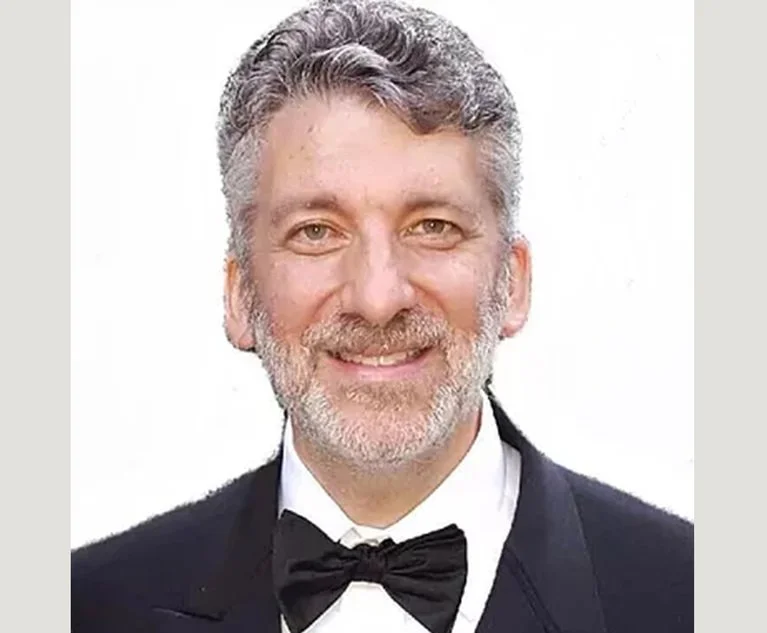 Dr. Ronald Lubetsky photo credit, the Florida Bar.[/caption]
The government’s prosecution of Dr. Lubetsky centers around the ambiguous language of the CSA, particularly the phrase “outside the usual course of his professional practice, other than for a legitimate medical purpose.” The government has moved away from the original intent of the CSA, which was to target drug trafficking, and instead has begun prosecuting physicians based on increasingly vague and shifting standards of medical practice.
At trial, the government’s medical expert, Dr. Rubenstein, testified that Dr. Lubetsky’s prescriptions were issued outside the usual course of professional practice. This testimony was based solely on audio recordings of the patient visits and did not include a review of any medical records, diagnostic imaging, or the patient’s prescribing histories.
Rubenstein’s testimony was based solely on audio recordings of the patient visits and did not include a review of any medical records, diagnostic imaging, or the patient’s prescribing histories.
Dr. Rubenstein asserted that the lack of a detailed physical examination and comprehensive medical history in these specific cases rendered the prescriptions illegitimate. However, this opinion was formed without considering the full context of Dr. Lubetsky’s practice and the treatment of thousands of legitimate pain patients.
The Circuit Split and Post-Ruan Interpretation
A key legal issue in Dr. Lubetsky’s case is the circuit split over how the ambiguous language of the CSA should be interpreted. Specifically, courts are divided on whether the requirement for a prescription to be issued “for a legitimate medical purpose by an individual practitioner acting in the usual course of his professional practice” should be read conjunctively or disjunctively.
• Conjunctive Reading: Under this interpretation, both elements—issuing for a legitimate medical purpose and acting in the usual course of professional practice—must be satisfied for a prescription to be considered lawful.
• Disjunctive Reading: Under this interpretation, a prescription could be deemed unlawful if it fails to meet either of these elements. This reading lowers the threshold for criminal liability, as a physician could be prosecuted even if they prescribe for a legitimate medical purpose but allegedly do not follow the usual course of professional practice.
The Eleventh Circuit, where Dr. Lubetsky was tried, has adopted the disjunctive reading. This approach has significant implications, as it allows the government to prosecute physicians even when there is no clear evidence that the prescriptions were issued for anything other than a legitimate medical purpose. This interpretation is in conflict with other circuits that have adopted the conjunctive reading, which provides greater protection to physicians by requiring that both elements be proven before a conviction can be secured.
The Supreme Court’s decision in Ruan v. United States was expected to clarify this issue, but it has instead led to further narrowing by the U.S. Circuit Courts. In Ruan, the Court recognized the ambiguity in the language of the CSA and highlighted the importance of a strong scienter requirement to avoid overdeterrence. Despite this, the Eleventh Circuit has continued to uphold the disjunctive reading, creating a situation where physicians are left with little clarity on the standards they must meet to avoid criminal liability.
Government’s Shifting Standards
Dr. Lubetsky’s case also underscores a troubling trend: the government’s shifting standards for what constitutes acceptable medical practice under the CSA. Historically, the CSA was used to target physicians who were clearly engaged in drug trafficking—those who prescribed controlled substances without any medical justification, often to patients who explicitly stated they intended to use the drugs for non-medical purposes. However, in recent years, the government has broadened its interpretation of the CSA, prosecuting physicians based on vague and unenumerated standards of medical practice that often go beyond what state laws require.
In Dr. Lubetsky’s case, the government’s expert applied a standard for prescribing that exceeded Florida’s requirements. Florida law mandates that a complete medical history and physical examination must be conducted before beginning opioid treatment, but there is no requirement for a physical examination at every follow-up visit. The expert, however, testified that a physical examination was required at every visit when opioids were prescribed, thus holding Dr. Lubetsky to a higher standard than what is legally required in the state.
This evolving and inconsistent application of standards places physicians in an untenable position, where they must navigate not only state laws but also fluctuating federal expectations that may not align with established medical practices. The consequence is a chilling effect on the practice of pain management, where doctors may avoid prescribing necessary medications out of fear of prosecution, leaving patients to suffer.
Interested Parties May File an Amicus Brief with the Court
Given the complex legal and medical issues at play in this case, it is imperative that advocacy groups concerned with patient care, medical ethics, and physician rights take action. Filing amicus briefs in support of Dr. Lubetsky’s petition to the Supreme Court is crucial to ensure that the Court fully understands the broader implications of this case. These briefs can help the Court appreciate the potential harm of allowing ambiguous and overly stringent interpretations of the CSA to persist.
Ronald Chapman II is the founder of Chapman, Dowling & Mallek and a top-rated Michigan federal criminal defense attorney who represents clients in federal courts nationwide. His practice is focused on defending individuals and organizations in complex federal prosecutions, including white-collar criminal matters and healthcare fraud investigations.
Throughout his career, Mr. Chapman has helped clients avoid more than $550 million in potential penalties, primarily in cases involving physicians, healthcare providers, executives, and professionals facing federal charges. He is widely recognized for his work as a Michigan healthcare fraud defense attorney, as well as for his results in white collar criminal defense in Michigan, where cases often involve parallel civil, regulatory, and criminal exposure.

Apr-8-2026
Hospice fraud is a serious enforcement priority for Medicare, and federal regulators are under pressure...

Apr-2-2026
In federal court, some of the most important battles happen after trial—on appeal—where the focus...

Jan-9-2026
Memphis, Tennessee – The verdict returned this week in United States v. Sanjeev Kumar closed...

Dec-31-2025
Dr. Lonnie Joseph Parker, a Texarkana physician, was recently convicted in federal court of unlawfully...
Serving Clients Nationwide.
Chapman, Dowling & Mallek is headquartered in Detroit, Michigan and represents clients in federal investigations and criminal matters across the United States. Our attorneys handle complex federal cases nationwide while maintaining offices in Michigan and other states.
456 E. Milwaukee, Detroit, MI 48202
21 Comments
Godspeed!
What as a CPP do you need us to do? I live in Florida.
NC CPP ... what cab we do to help?
Amazing work. At least someone is fighting back.
How can we CPP support/help?
I TRIED TO PULL THE FORM UP TO SIGN.HOW DO WE SIGN AND SEND??
How do we the people/ patients sign or add the file amicus briefs??
The legal precedents and interpretations in this case are complex. As a subject matter expert on public health policy as it applies to prescription of opioid pain relievers, I offer the following insights:
The following is a draft paper now in circulation to publishers, has been provided separately to Chapman, Dowling & Mallek, in a version that incorporates linked references.
In Defense of Doctors Who Treat Pain -- Questions and Answers
Richard A Lawhern PhD
August 2024
As a healthcare writer and patient advocate for almost 30 years, I read a lot. Recently, some of that reading has been in court transcripts of doctors being persecuted out of medicine or into jail by DEA prosecutors and their hired “experts.” I use the term “persecuted” intentionally. I believe that many DEA or State Attorney General “medical experts” are simply “hired guns” – clinical predators paid large sums of money to tell stories whose details they do not actually understand.
Most judges and juries understand even less.
No lawyer likes to ask questions to which they don't already know the answers. But sometimes one must explore a witness's qualifications rigorously – and the Judge's qualifications as well. In my view, no judge or jury is competent to assess the credibility of a witness who testifies against a doctor unless both the witness and the judge understand not only the content of the medical literature but also its major weaknesses.
This principle was demonstrated glaringly in a conference of the Florida Society for Interventional Pain Physicians, where I was invited to speak three years ago. Beginning my lecture, I asked an audience of about 100 doctors and nurse practitioners several questions for a show of hands. The last question was “how many of you have recent training in the evaluation of clinical trials and study protocols?”
No hands went up.
As I suggested to the audience, “you realize of course, that without this background, when you read only the abstract of a published clinical paper, you have no idea whether the authors or peer reviewers knew what they were doing? You lack the skills to check their work.”
You could have heard a pin drop as I continued the lecture.
Even "experts" fall victim to the burdens of high reading workloads. We now know that the peer review process is failing in medical literature just as it is in psychology and psychiatry - and even physics. This failure is a dimension of what we call the "replication crisis" and relatively few judges are even aware of the problem.
In many areas of science, when widely-accepted studies are repeated by different investigators, results are different from the first time around. Even when similar outcomes are observed, results are frequently weaker or more ambiguous than in the original. Expectation bias and investigators’ professional self-interest likely cause such failures.
A reliable rule of thumb in such matters is the GIGO law: “garbage in, garbage out.” Huge numbers of papers in all areas of science now suffer from weak or unexamined assumptions, flawed methods, bias and cherry picked research. But without probing the actual knowledge of “expert” witnesses, judges and juries cannot know if they are hearing generally accepted principles and practices, or not -- even when literature is quoted in testimony.
For a doctor who treats pain with opioid pain relievers, these errors can result in profound miscarriages of justice. Physicians have reported being targeted by the Drug Enforcement Agency (DEA) and other authorities for prescribing opioids, even when done legitimately for chronic pain management. Doctors have experienced raids, had their medical records seized, and faced public scrutiny which has led to the ruin of their practices, and even patient suicides. Some have been denied adequate representation by DEA pre-trial asset seizures.
A few pertinent questions should be asked of any “subject matter expert” who testifies against a doctor concerning prevailing practice on opioid pain relievers. Judges should be asking these questions too.
First, about the expert:
• Question: How many patients have you treated for pain or addiction during your career? How many of them died from all causes while under your care? How many were well managed on non-opioid medications?
Answer: Patients treated for severe chronic pain often face higher mortality rates compared to the general population. Chronic pain can be associated with increased risk of death, particularly from causes such as cancer, diseases of the circulatory and respiratory systems, and suicide. None of these factors is a consequence of use as directed of FDA-approved opioid drugs.
• Question: How many patients have you discharged or referred to an addiction specialist after they complained of inadequate pain care? Is this typical of other practitioners in your field? How do you know? What is the nature of “opioid dependence?” Are you familiar with the term “pseudo-addiction?
Answer: Opioid dependence is a purely physical reaction where patients who have been treated with opioid pain relievers experience withdrawal symptoms if they are tapered down too rapidly from their medications. Dependence is not addiction. Pseudo-addiction is an affliction of doctors, not of patients. It reflects a misinterpretation of patient requests for better pain control, on the part of doctors who are afraid of legal sanctions for prescribing opioids.
Next, About Patient Risks and Benefits
• Question: In your opinion, how frequently do patients treated for pain by a doctor die of a prescription drug overdose?
Answer: Incidence of overdose-related mortality in clinical patients is too low to confidently estimate within confounds imposed by poor doctor training and limited observation time in clinical encounters. However, definitive studies indicate that combined incidence of near-term suicide events or hospitalization for overdose in clinical patients treated with opioids is on the order of 2% or less.
As noted by the Director of the US National Institute on Drug Abuse, “unlike tolerance and physical dependence, addiction is not a predictable result of opioid prescribing. Addiction occurs in only a small percentage of persons who are exposed to opioids — even among those with preexisting vulnerabilities”. Dr Volkow is also on record questioning the prevailing emphasis on “abstinence only” policies in addiction treatment.
• Question: What are the best indicators that a patient may have bad outcomes from pain treatment using prescription opioids?
Answer: A history of attempted suicide, hospitalizations for overdose, severe anxiety or behavioral health issues is four to twenty times more significant than treatment with opioids in next-year risk of overdose or suicide.
Finally, About Consensus Standards of Care
• Question: Is there a widely accepted consensus standard of opioid prescribing that defines practical limits on dose levels due to patient risks?
Answer: No there is not. The 2022 CDC Clinical Practice Guideline is not a "consensus" standard for the treatment of pain. The CDC itself indicates that their guidelines are intended as “recommendations to guide clinicians in making informed, patient-centered decisions about pain care, including opioid therapy…”
Indeed, CDC and Veterans Administration guidelines are widely rejected by practicing clinicians on multiple grounds:
o Weak medical evidence and gross over-emphasis on risk and tapering of legacy patients, many of whom have been stable for years on high-dose opioid therapy.
o Anti-opioid bias, cherry-picked research, and faulty methodology, including scientifically unjustifiable recommendations to the effect that non-opioid pain relief is “preferable” to opioids – in the complete absence of trials that demonstrate any such thing.
o Failure to address or embrace the implications of highly variable opioid metabolism between individuals, due to genetics – a failure reflected in almost all published drug trials.
Conclusions:
However uncomfortable this reality may be for prosecutors or judges, there is presently no consensus standard by which a doctor’s prescribing practices can be determined to lie outside usual and accepted conditions of practice. The central and arguably only pertinent judgment of potential benefits and harms for each patient is the doctor’s clinical experience and training. The misinformed testimony of a paid professional witness is simply not enough to contradict that judgment.
If a doctor or pharmacist harms patients by inattention, negligence, or unprofessional conduct, then State Medical Boards and Boards of Pharmacy are charged with revoking their licenses. If a doctor prescribes or a pharmacist dispenses opioids in the absence of face-to-face doctor-patient relationships, medical testing and ongoing patient monitoring, then we recognize indicators for a possible pill mill prompting referral to law enforcement authorities.
De-licensing clinicians, placing them on probation or sending them to jail for occasional errors in record keeping is simply ludicrous. The practice of medicine has been grossly criminalized by government overreach. It is past time for such overreach to end, and for political interference in the practice of evidence-based medicine to end with it.
Even in cases where a doctor’s prescribing practices seem questionable, burden of proof is on law enforcement and the so-called “subject matter expert” to demonstrate beyond a shadow of doubt that the defendant knowingly or intentionally acted in an unauthorized way.
Unless evidence is documented of verified harms suffered by patients due to a doctor’s actions, there can be only one legally and ethically justified outcome:
-----------------------
Author Note: Richard A Lawhern, PhD, is not a lawyer or a licensed clinician. He is author or co-author during 27 years, of over 250 papers, articles, and interviews published in a mixture of peer-reviewed clinical journals and mass media. His work focuses on the intersection of public health policy with regulation of pain medicine.
They are subjecting Americans to an amount of Torture they are unable to perceive exists. I understand their bias is born from ignorance. But there has to be a way to show them that ave Torturing Hospice Patients and other disabled people cuts what social productiveness we can accomplish in Half. I have done charity work since before I became completely disabled. Society should be ashamed of itself that I Still perform this work even while dying because I can not find a single person willing to give of themselves and take over. I die knowing I leave a selfish and ignorant World. God save us from the Evil of Man's pity-less control.
I sincerely feel for you but must clarify your overly-benign characterization of "them:"that their bias is borne of ignorance. By this point in time, with all of the suicides, patient abandonments, court-rulings in patients' and physicians' favor (ie Ruan,) revoked physicians' licenses, imprisoned physicians, egregiously fined physicians, mental health crises due to clinically innapropriate and clinically undeserved rapid tapers and discontinuations of medications, etc, it's my conviction that "they" now fully know (and have known) the harm, devastation, and implicit trampling of civil rights that their actions, both legal AND illegal, are causing. This is not to mention the fraudulence they employ to justify and provide a so-called "legal" platform upon which to justify and protect them in continuing to perpetuate such illegal harms, as well as the unethical methods they resort to so as to ensure that their biases and agendas are made manifest. This is in tandem with the fact that they continue to proceed with their illegal maneuvers in all of the aforementioned matters in spite of multiple courts' rulings affirming that these maneuvers and agendas are not in keeping with the scope of their formally-mandated missions and purposes.
Again, I believe that this mischaracterization is due to your trusting nature, not only in all things in general, most likely, but also in the goodness of the agencies and governmental organs that are tasked with upholding the very protections and rights that they're obstructing and crushing. I'm so sorry that you're in the position in which you've wound up, and I hope that you're able to find some peace and relief in your life, and with special regard to your personal (health) situation. May God bless you, and have mercy upon you, which I have no doubt but that He will...all best,
Ethan Lavin
What can CA CPP do to help?
Along the line with Richard A. Lawhern PhD's comment regarding the qualifications of judges, juries, etc., I'm also concerned about the qualifications of a defense attorney's ability to build a strong defense. The government immediately freezes a doctor's assets, which I think would make it harder to hire a qualified, experienced attorney. How much effort does the attorney make to educate himself/herself in order to build a strong defense? I honestly don't understand how the government in this country is allowed to freeze a doctor's assets before being found guilty. And as Richard A. Lawhern PhD pointed out, I also thought we're supposed to be tried by a jury of our "peers." This has been a concern of mine for a long time. A person would need to have enough knowledge about the subject to be considered a "peer." I'm sure this is not happening. There's just so much wrong with this entire picture.
When I attempted to file an amicus brief, I noticed that there are very specific rules you must follow in order for it to be accepted. If anyone can give us some guidance in this area, it would surely be helpful and appreciated.
So, if a Dr must be stringent cross every t and dot every I to accommodate a vague, suggestive rule. What in the world! It seems nothing was thought through thoroughly and this is some kind of money grab. Which I have thought all along. Now we will start to see reports of how inhumane this is. A oversight committee for the DEA gangs who have again shown their true colors. I want to live long enough to see this. I've been disabled suffering horrible pain for over 25yrs. I've never came across a Dr who wasn't extremely careful. Who went over every pro & con. And they want us to believe Dr's still freely hand out meds. There are no more pill mills. So who are they going after? Good Dr's that own their practices. Are over 60yrs old and have alot of stuff. Like vacation homes, boats, cars etc the DEA can take it. I mean steal it. That's what they are doing now. It's criminal.
We cannot add on as you wish, but the pain Community needs to know and you have a powerful Allie RFK just joined the Trump train and major platform issue was chronic pain patients might want to see if they would file a brief on our behalf
There is a large community in this government and in this country that believes that they need to stop every prescription opioid being written forever, they’ve convinced themselves patients don’t need them and they also are convinced that opioids are the reason for the addiction crisis in the world. They are not getting the correct information, they are severely misinformed and are putting people’s lives and health in jeopardy- meanwhile if they only actually concentrated their efforts on actual medical research on addiction and helping addicts and putting their minds and money and resources and open some freaking rehabs ( free or affordable or insurance based??????? ) maybe this country could start healing- it’s very rare to see a doctor not following protocol when treating patients with chronic pain illnesses/ diseases/ injuries- full stop- not to sound like a some people but they’ve made this a war against innocent doctors and pain patients and it’s beyond disgusting and shameful
I’ve been in practice long enough to remember being chastised for not giving an obvious drug dealer the prescription he was demanding in the Emergency Department, the “Pseudo addiction” theory that Big Pharma was propagating to encourage us to give even larger doses when the patient said they were “still in pain” despite huge doses of a narcotic, the pain score, signs posted in the ER that said “You have a right to pain control” as though it never occurred to us to give someone in pain medication to relieve that pain, and working alongside colleagues who told me “just give them whatever they want and get them out of here.” Now the pendulum has swung in the opposite direction. A family member of mine could not get a refill on Tramadol that was over 3 months old because he only took it now and then because, in his new doctor’s words: “I don’t give those drugs.” And whatever happened to due diligence? How could they accept an expert who did not even review the case as we would in any Credentialing Committee application? He calls himself an “expert” but didn’t review the pertinent elements of the case; sounds like fraud to me. Yet, I am sure he gets paid more than myself while I take care of people who are addicted.
Standard of care is NOT the law. In Canada, we have The Healthcare Consent Act which guarantees informed consent is a right, every aspect of informed consent. In addition, case law overwhelmingly supports one’s right to choose their treatment options with no ambiguity at all. Is there a link to the healthcare consent laws in the US somewhere? The expert should take into consideration patient preferences.
I so wish, you would use your legal expertise to get chronic pain patients their care back. We endure discrimination at every turn. We are told medicine isn't a direct science. Yet for CPP, it is now a " direct science" in that no matter what you don't need pain relief. I miss the days I could work. Now I have a beautiful granddaughter and I can not be the valued presence in her life like my grandmother was in mine because of under treated pain. My grandmother, back in the 70's could make holiday dinners, enjoy family and garden with RA at age 75. Why? She had opioid medications to treat her pain. No one would know she had such bad arthritis because she had compassionate care from her doctor. We loved our time with her. My granddaughter will never get those memories because her grandmother is in bed most of the time. I'm one of millions since the profiteers of PROP destroyed our lives. Anyway, I admire your commitment to protecting our doctors because they are under attack because of corruption and profit. Thank you.