
Health Care Fraud Sentencing Statistics
Insights from White Collar Criminal Defense Attorneys Trusted Nationwide
In Fiscal Year 2022, an in-depth analysis of health care fraud prosecutions in the United States reveals significant insights into sentencing patterns and the characteristics of those prosecuted. This comprehensive overview draws from the United States Sentencing Commission’s data, shedding light on how sentences are determined and the profile of typical offenders.
A total of 58.5% of health care fraud offenders were sentenced under the Guidelines Manual, with sentencing outcomes varying significantly:
39.3% of these offenders were sentenced within the guideline range, indicating adherence to the standard sentencing framework.
A notable 53.2% received a sentence reduction for substantial assistance, with an average reduction of 65.7% from the guideline sentence. This substantial proportion suggests a high level of cooperation among defendants in health care fraud cases, potentially providing valuable information or assistance in other investigations.
Another 7.5% benefited from other forms of downward departure, not specified as substantial assistance, with an average sentence reduction of 53.6%.
Additionally, 41.5% of offenders received a variance from the guideline sentence, all of which were downward, leading to an average sentence reduction of 54.8%. This reflects a judicial discretion that takes into account various factors beyond the guidelines, possibly including the defendant’s background, the specifics of the crime, or mitigating circumstances.
The average sentence for health care fraud offenses has shown stability over recent years, with an average imposed sentence of 30 months in both FY 2018 and FY 2022. However, the average guideline minimum sentence has fluctuated slightly, from 48 months in FY 2018 to 53 months in FY 2022, indicating a slight tightening of the sentencing guidelines over this period.
The demographic data of prosecuted individuals provides insights into who is typically targeted in these fraud cases. The median age of offenders is 49 years, with a majority being U.S. citizens (90%) and having little to no prior criminal history (88.6%). This profile suggests that health care fraud prosecutions often target established professionals within the healthcare sector, rather than career criminals.
Certain districts are more prominent in health care fraud prosecutions, with the Southern District of Florida, Eastern District of Michigan, Central District of California, Southern District of Texas, and Northern District of Texas leading in numbers. This geographical distribution may reflect both the concentration of healthcare services and the specific focus of federal law enforcement efforts in these regions.
Healthcare fraud cases in the United States have seen a significant rise, with federal agencies intensifying their scrutiny on providers. The complex nature of these cases necessitates a nuanced defense strategy, as showcased by notable acquittals secured by healthcare fraud attorney Ronald W. Chapman.
Healthcare fraud involves deceptive practices aimed at illicit financial gain from health insurance programs, such as Medicare and Medicaid. This can include billing for unrendered services, upcoding, and kickbacks. The penalties under statutes like 18 U.S.C. § 1347 are severe, highlighting the need for a proficient medicare fraud attorney.
Ronald W. Chapman’s approach emphasizes detailed investigation, expert testimony, and statistical analysis to dismantle the prosecution’s claims. His successful defense in cases such as Dr. Lesly Pompy’s acquittal (source) and Dr. Loey Kousa’s case (source) underscores the effectiveness of these strategies. Chapman’s defense highlights the legitimacy of medical practices under scrutiny, challenging allegations of intent to defraud.
The federal statute 18 U.S.C. § 1347 outlines severe penalties for healthcare fraud, making the role of a medicare fraud defense attorney crucial. Successful defense strategies not only focus on acquittal but also aim to mitigate sentencing, leveraging in-depth legal and medical knowledge to navigate the complexities of federal laws.
A key element of Chapman’s defense strategy is the utilization of expert witnesses to clarify medical billing and coding practices, as well as the medical necessity of treatments. This approach effectively counters the prosecution’s narrative by demonstrating compliance with healthcare regulations.
The acquittal and favorable sentencing in healthcare fraud cases require a comprehensive defense strategy. Ronald W. Chapman’s track record of securing acquittals for his clients demonstrates the importance of specialized legal representation in these complex cases. His approach serves as a guide for healthcare providers facing legal challenges, emphasizing the necessity of experienced medicare fraud defense attorneys.
For healthcare providers navigating the legal landscape of fraud allegations, the expertise of a healthcare fraud attorney is indispensable. The strategic defense exemplified by Ronald W. Chapman provides a blueprint for contesting charges and securing favorable outcomes in the face of federal scrutiny.
These insights into defending against healthcare fraud charges underscore the critical need for specialized legal representation. Whether seeking acquittal or a more favorable sentence, the expertise of a dedicated healthcare fraud defense attorney can make a significant difference in the outcome of such cases.
Ronald Chapman II is the founder of Chapman, Dowling & Mallek and a top-rated Michigan federal criminal defense attorney who represents clients in federal courts nationwide. His practice is focused on defending individuals and organizations in complex federal prosecutions, including white-collar criminal matters and healthcare fraud investigations.
Throughout his career, Mr. Chapman has helped clients avoid more than $550 million in potential penalties, primarily in cases involving physicians, healthcare providers, executives, and professionals facing federal charges. He is widely recognized for his work as a Michigan healthcare fraud defense attorney, as well as for his results in white collar criminal defense in Michigan, where cases often involve parallel civil, regulatory, and criminal exposure.
Apr-8-2026
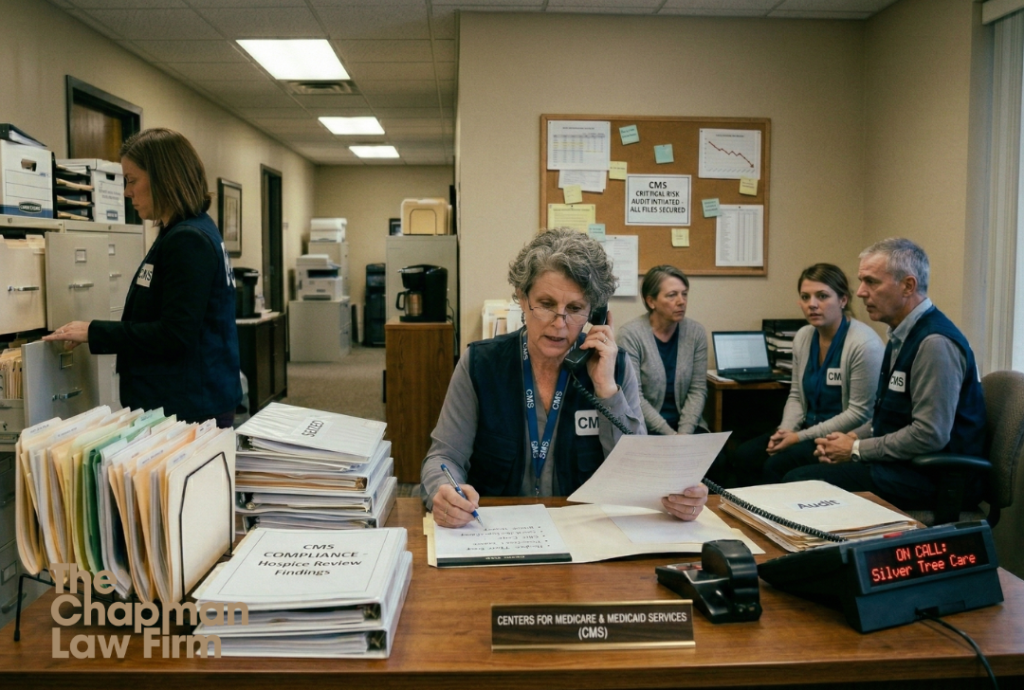
Hospice fraud is a serious enforcement priority for Medicare, and federal regulators are under pressure...
Apr-2-2026
In federal court, some of the most important battles happen after trial—on appeal—where the focus...

Jan-9-2026
Memphis, Tennessee – The verdict returned this week in United States v. Sanjeev Kumar closed...
Dec-31-2025
Dr. Lonnie Joseph Parker, a Texarkana physician, was recently convicted in federal court of unlawfully...
Serving Clients Nationwide.
Chapman, Dowling & Mallek is headquartered in Detroit, Michigan and represents clients in federal investigations and criminal matters across the United States. Our attorneys handle complex federal cases nationwide while maintaining offices in Michigan and other states.
456 E. Milwaukee, Detroit, MI 48202